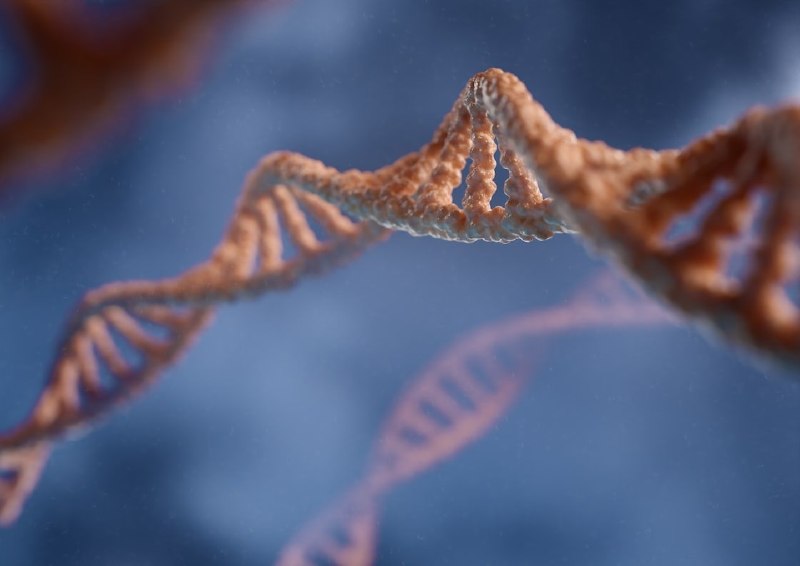
One of the most fundamental questions in science — how life began — has received an unexpectedly concrete and encouraging answer. Scientists at the UK Molecular Biology Laboratory have identified one of the simplest RNA molecules capable of self-replication. The molecule QT45 consists of just 45 nucleotides, yet it acts as a polymerase — it can assemble new RNA strands.
Most previously known ribozymes (RNA molecules capable of speeding up chemical reactions) are significantly longer and more complex. This complexity long served as the main argument against the RNA world hypothesis — the idea that life began with RNA, before DNA and proteins appeared.
The researchers analyzed a library of 12 trillion random RNA sequences, selecting those that showed catalytic activity. After a series of laboratory “evolutionary” tests, QT45 was chosen as the most effective. It was then tested in conditions similar to those on early Earth — in a mixture of water, salts, and ice. In this environment, the molecule was able first to synthesize a complementary RNA strand and then use it as a template to create a new copy. In this way, the basic self-copying mechanism needed for life to emerge was demonstrated.
Over the past decades, science has advanced in understanding chemical evolution, but the key transition from “nonliving” to “living” has remained unclear. This new work suggests that the boundary between them may not be so sharp after all. If the basic mechanisms of self-replication are so simple, it increases the possibility that life could also arise elsewhere in the Universe, where at least minimally suitable conditions exist.