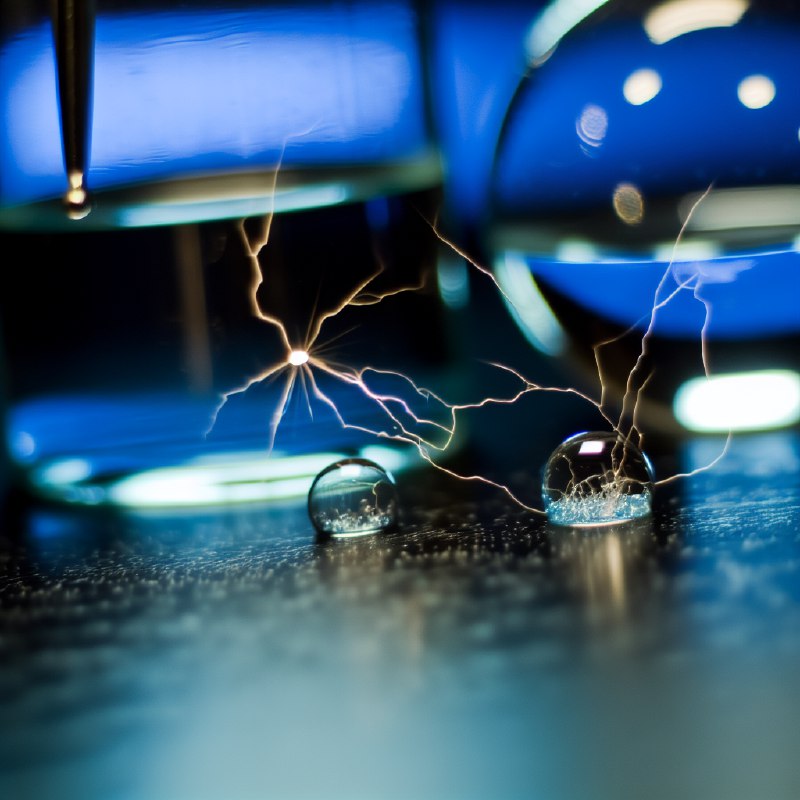
A team from Stanford University has proposed a new hypothesis for the origin of life: key roles could have been played by “microlightning”—weak electrical discharges that occurred when water droplets collided on early Earth. These discharges reacted with gases and formed carbon–nitrogen bonds, essential components of organic chemistry.
Unlike the classic Miller–Urey experiment, which relied on lightning, the new theory points to a steadier and more frequent source of organic matter. This shifts our view of where life might have begun—not only in the “primordial soup,” but also, for example, in atmospheric aerosols or sea spray.
The finding not only reframes the history of life on Earth but also suggests new environmental solutions: such microlightning could be used to clean the atmosphere and to produce ammonia, a substance critical for agriculture.