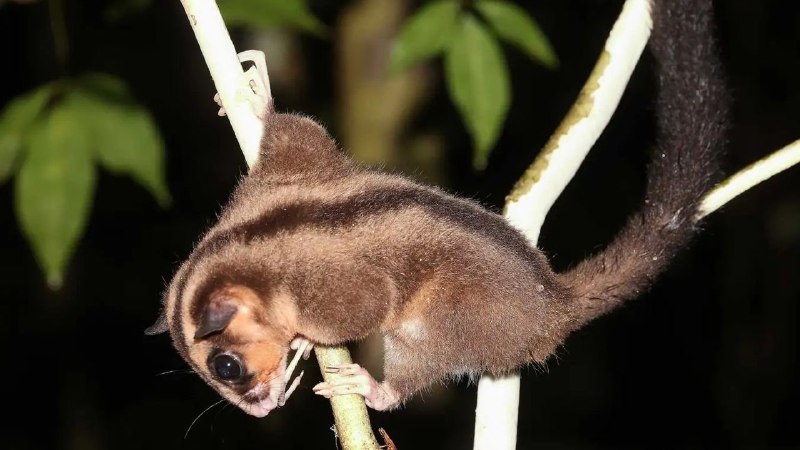
While some species disappear under the pressure of civilization, others, it turns out, simply fade into the background. A new discovery in New Guinea shows that sometimes “extinct” is just a misunderstanding. For thousands of years.
In the tropical forests of New Guinea, on the Vogelkop Peninsula, researchers found a ring-tailed glider and a pygmy long-fingered opossum. Until now, these species had been known only from fossil remains in Australia dated to about 6,000 years ago.
The story of the discovery stretched across nearly three decades. The first hints of their existence appeared back in 1999, but only 27 years later was the research team able to confirm the find with observations and photographic evidence. Both species live in the inaccessible rainforests of the Papuan part of Indonesia.
The Vogelkop Peninsula itself is an ancient fragment of the Australian continent that gradually “moved” and became part of New Guinea. Such areas are like archives of nature: they can preserve species that have long disappeared elsewhere.
Interestingly, without the help of local residents, this discovery might never have happened. The researchers worked with the elders of local clans, who helped point out the animals’ habitats. Moreover, in some traditions the ring-tailed glider is considered a sacred animal. And it may have been precisely this respectful attitude that helped preserve it.