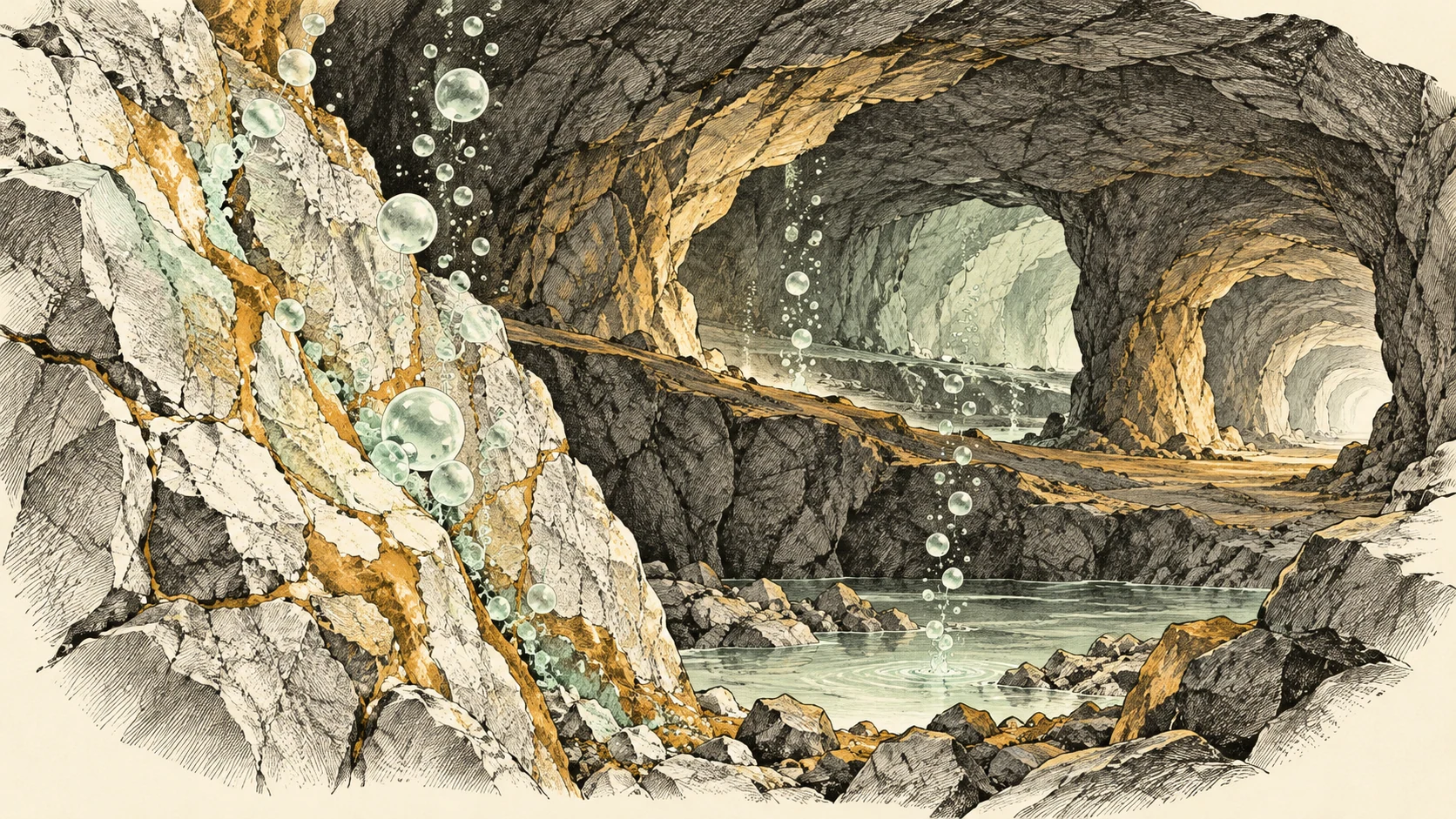
Canadian scientists from the University of Toronto and the University of Ottawa have directly measured, for the first time, the release of natural hydrogen from ancient rocks of the Canadian Shield. The study was carried out in an operating mine near the city of Timmins in Ontario. The results showed that hydrogen not only forms naturally, but can also be released steadily over many years.
According to the researchers, one borehole emits about 8 kilograms of hydrogen per year. Observations indicate that such a flow can persist for at least ten years. If the results are extrapolated to nearly 15,000 similar boreholes in the region, the total volume could exceed 140 tons of hydrogen per year. This is equivalent to about 4.7 million kilowatt-hours of energy — enough to supply more than 400 homes.
The material concerns so-called "white" hydrogen, which forms through natural chemical reactions between rocks and groundwater. Unlike most modern methods of producing hydrogen, this process does not require the use of fossil fuels and is not associated with direct carbon dioxide emissions.
The authors note that similar geological structures are found outside Canada as well. In addition, hydrogen-forming zones often coincide with areas where nickel, copper, lithium, and cobalt are mined, which makes it possible to use existing infrastructure. The study is one of the first pieces of evidence that natural hydrogen could be a stable and practically meaningful energy resource.