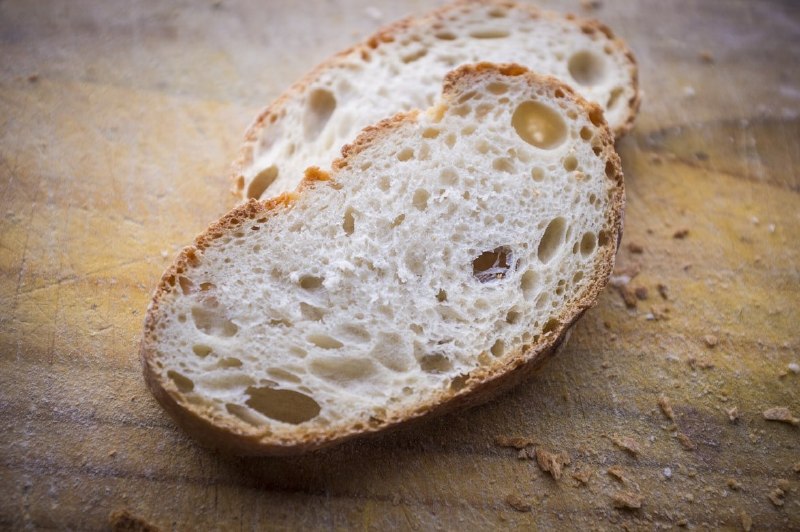
Stale bread, a household waste item that rarely draws much regret, may get an unexpectedly high-tech second life. The University of Edinburgh has proposed using bread waste to produce hydrogen.
For this, Escherichia coli bacteria were used to process sugars from stale bread and generate hydrogen in an oxygen-free environment. That hydrogen is then used immediately in a hydrogenation reaction in the same vessel. The process takes place at low temperatures and requires only a minimal amount of metal catalysts. The method makes it possible to отказаться from fossil fuels and potentially reduces emissions, including methane produced in landfills.
In recent years, the chemical industry has been actively looking for ways to move away from “dirty” hydrogen produced from natural gas. Alternatives such as “green” hydrogen based on electrolysis require significant energy and infrastructure. An approach based on waste looks not only environmentally friendly, but also economically promising. We are gradually learning to live in a world where “trash” is not the end of the story, but its beginning. And now, when grandma says, “You’re throwing away bread? Children in Africa are starving!” there is an unexpectedly modern reply. Although it probably still won’t fully convince grandma.
Source: Interesting Engineering