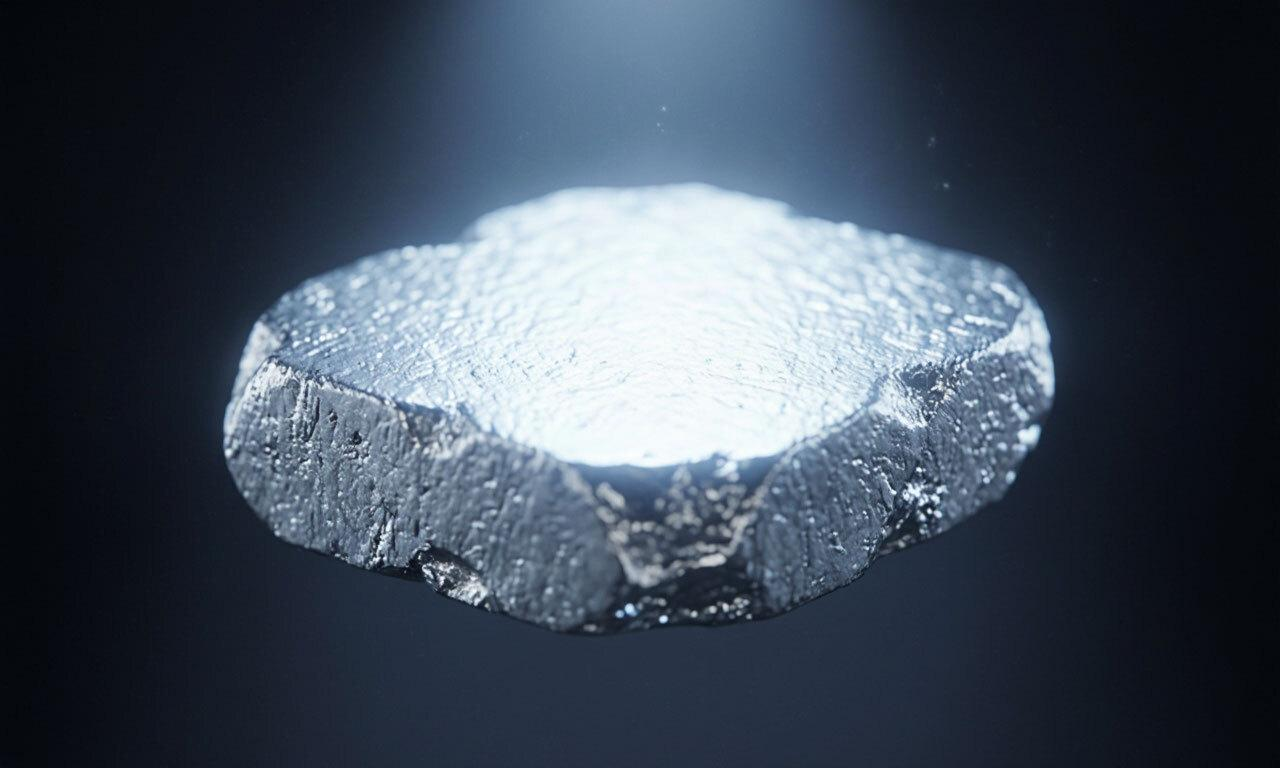
The Chinese Academy of Sciences has proposed an unusual way to extract uranium from water: instead of waiting for the needed ions to drift into a filter, send microscopic “collectors” after them. The researchers have developed micromotors based on a metal-organic framework — a porous material in which metal nodes are linked by organic molecules.
The material does more than absorb uranium: it moves through water on its own. Particles about 2 micrometers in size use light as a source of motion. In the presence of a small amount of hydrogen peroxide, they speed up to about 7 micrometers per second, and under illumination they almost double that speed.
The concentration of uranium in seawater is extremely low, although the total запас is estimated at about 4.5 billion tons. Conventional passive materials work slowly: they wait for a random encounter with uranium ions. The new micromotors change the basic principle — they actively move and increase the chance of contact.
The technology is still far from industrial-scale extraction. The scientists explicitly point to scaling difficulties and to the fact that high salinity may limit the micromotors’ performance. But the idea itself looks promising. Such a material opens up two practical directions at once. On the one hand, it could become the basis for extracting fuel for nuclear power plants directly from water without developing new deposits. On the other hand, similar systems could potentially be used to clean radioactive water, where it is important to quickly and efficiently remove dangerous elements from the environment.