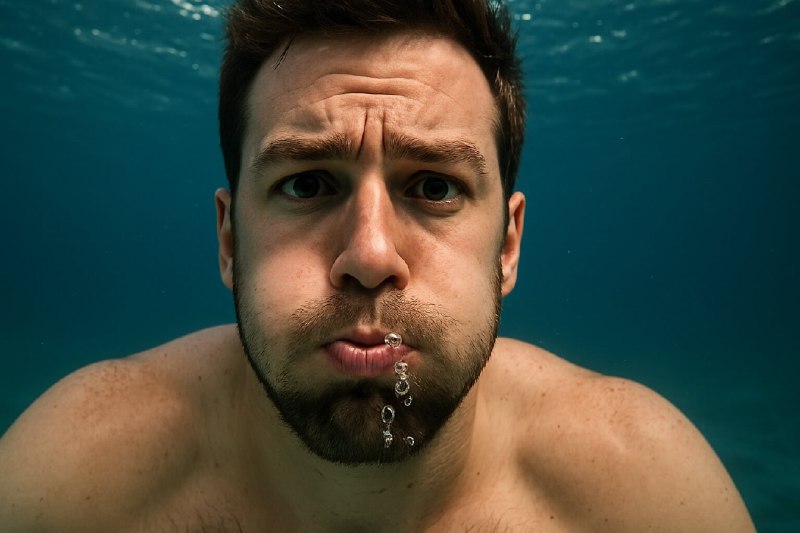
Last year, Croatian freediver Vitomir Maričić did something that sounds like a science-fiction movie scene: he held his breath for 29 minutes and 3 seconds. Almost half an hour underwater in a regular three-metre pool. In doing so, he beat the previous record, set by his fellow countryman Budimir Šobat, by almost 5 minutes.
An average person starts to feel uneasy after just 30–40 seconds without air. Many can last a minute. A minute and a half is already an achievement. So what is the secret? Maričić points to three pillars of preparation: breathing exercises, cardio training and mental work. Slow the pulse, reduce oxygen consumption, avoid panic. The main "panicker" in the body is carbon dioxide. It is its buildup that triggers the desperate signal: "Breathe now!" Champions, in essence, learn not so much how not to breathe as how not to panic.
There is also a technical detail. Before the record, the athlete breathed pure oxygen for about ten minutes. This significantly raises its concentration in the blood and gives the body a larger reserve of resilience. But this method is used only by professionals under medical supervision because of the risk of oxygen toxicity.
For science, such records are material for studying how the heart and lungs work under oxygen deprivation. Understanding these processes helps improve rehabilitation methods, prepare rescuers and divers, and, at the same time, more deeply study the limits of human endurance.