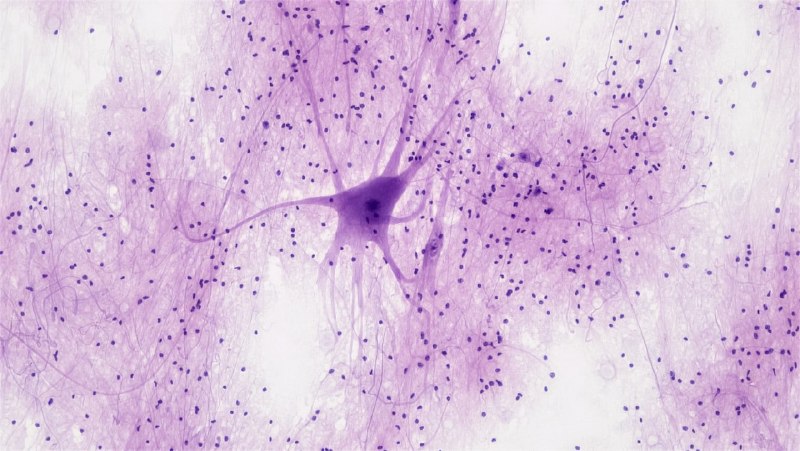
A study published in the journal Nature has finally settled a long-running scientific debate: the adult human brain really is capable of forming new neurons throughout life.
This process is called neurogenesis — the formation of new neurons — and for a long time it was considered characteristic mainly of animals. In humans, by contrast, it was thought that the number of neurons is fixed at birth and remains unchanged, meaning they can only be lost. As a result, traumatic brain injuries and diseases such as Alzheimer’s disease were seen as irreversible.
Scientists studied the hippocampus — the region linked to memory — and found all stages of nerve cell formation even in elderly people. Special attention was given to “superagers” — people over 80 with intact memory. In them, neurogenesis was significantly more active: there were about twice as many new cells as in ordinary older adults. In patients with Alzheimer’s disease, this process almost disappears.
The key mechanism turned out to be epigenetics — the degree to which DNA is “open.” When the structure is more accessible, genes responsible for neuron development are activated. The scientists also noted the role of regulatory proteins and supporting brain cells that help maintain neuron function.
Of course, the study does not yet provide final answers. But the most interesting part is the practical perspective. The scientists already suggest that neurogenesis may be influenced by lifestyle, diet, physical activity, and levels of inflammation in the body. If it becomes possible to keep DNA in an “open” state, this could become a new approach to healthy aging.