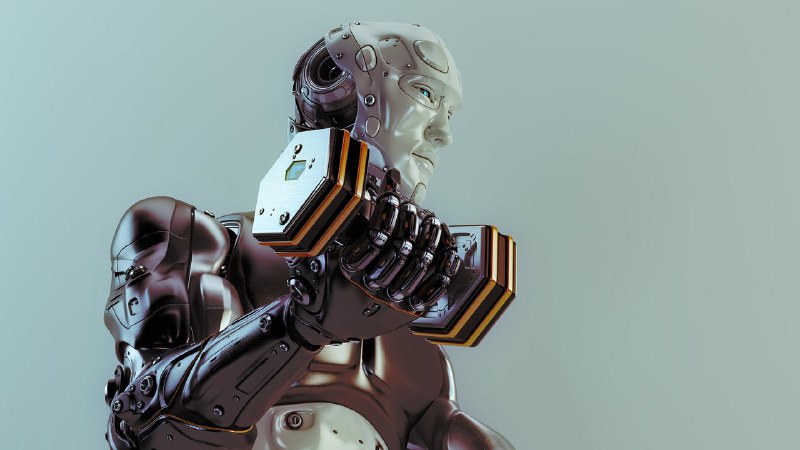
Engineers from South Korea have developed a new type of artificial muscle that can withstand a load 4,400 times greater than its own weight. At 1.13 grams, the muscle lifted 5 kilograms. Its contraction reaches 86.4%, twice that of human muscle, and its working energy density — 1,150 kJ/m³ — is almost 30 times higher than that of human tissue.
The secret of the technology lies in a special polymer with variable stiffness and the addition of magnetic microparticles. The muscle can become rigid under load and soft during movement. Inside the material, two networks work together — one chemically stable and one reversibly physical — which increases the strength and reliability of the design.
Until now, artificial muscles either tore under load or were too weak for serious applications. The new development opens the door to the creation of truly humanoid robots that will be able not only to interact delicately with objects, but also to perform heavy physical work.
At last, robot Olympics may become more spectacular: perhaps soon we will see synthetic champions in rhythmic gymnastics or figure skating…
Source: Live Science