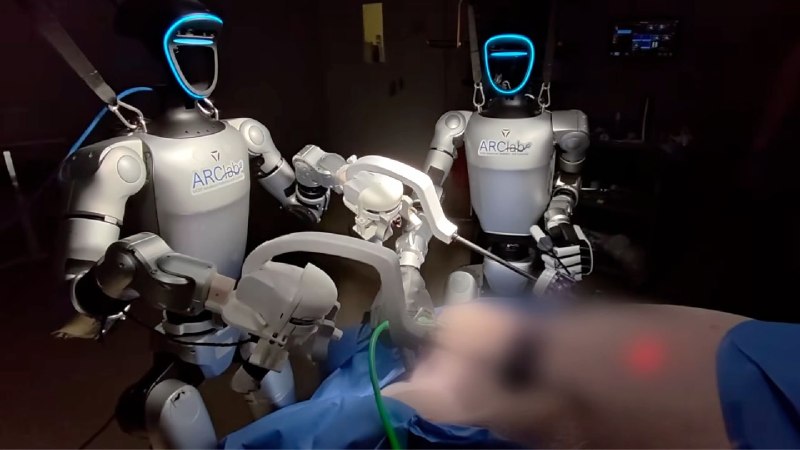
The University of California, San Diego has become the first in the world to successfully use teleoperated humanoid robots to perform two surgical operations in preclinical trials. During the first procedure, a gallbladder removal, the robot worked together with a surgeon, while the second was carried out by two humanoid robots under remote control. The trials were conducted on large non-primate animals.
Unlike existing surgical systems weighing about 800 kg, the Surgie humanoid robot weighs only 27 kg, stands about one and a half meters tall, and can operate in a regular operating room without expensive renovations. The robots use standard surgical instruments thanks to special adapters, and surgeons noted more intuitive control compared with traditional robotic platforms.
According to the researchers, the precision of the procedures is comparable to that of existing robotic systems. Engineers are working to reduce equipment calibration time and command transmission delay, which is especially important for future operations over long distances. Such robots could significantly expand access to high-tech surgical care in remote regions, field hospitals, and areas affected by emergencies.
The developers see humanoid robots not only as surgeons. According to the WHO, the world will still be short of about 11 million health workers by 2030, and the shortage will persist despite overall growth in the workforce. Thanks to their ability to walk and interact with their surroundings, robots could bring instruments, assist medical staff, perform routine tasks, and prepare operating rooms. This could significantly reduce the workload on doctors and nurses.