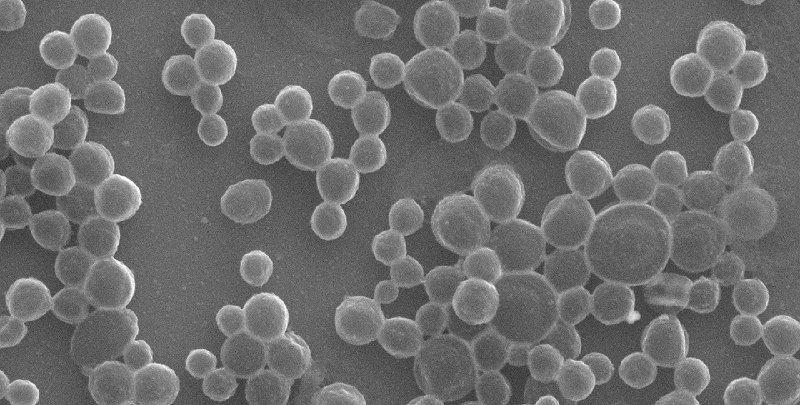
The California Institute of Technology and the University of Southern California have developed a new type of microrobot for cancer treatment — so-called “bubble bots.” Unlike earlier models, they are made with a protein shell based on BSA, a safe protein widely used in medicine. The bubbles are formed and activated with ultrasound, which greatly simplifies their production and use.
Two enzymes are attached to the surface of the microrobots. Urease allows them to move autonomously, using energy obtained from urea in the body. Catalase responds to the elevated concentration of hydrogen peroxide characteristic of tumor cells. Thanks to this, the bots can move along a chemical gradient — toward the source of the substance, that is, toward the tumor.
After reaching their target, the microrobots are broken apart by focused ultrasound and release the drug directly inside the tumor. In experiments on mice with bladder cancer, this delivery method reduced tumor mass by about 60% over three weeks.
Because of the simple design and accessible materials, the bubble bots look especially promising: they are biocompatible, visible on ultrasound, activated on demand, and relatively easy to manufacture. In addition, the drug would be delivered exactly where it is needed, which is not only more effective, but also gentler for the patient.