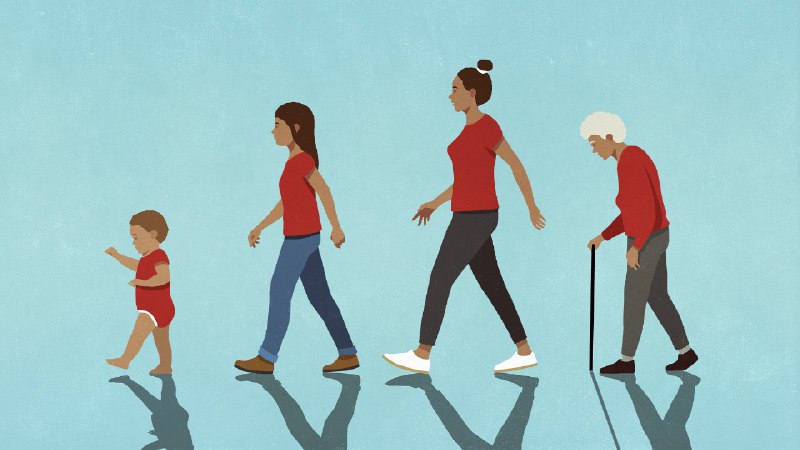
A team of scientists from Cambridge conducted one of the largest studies of human brain development across the lifespan. They identified five key stages of structural change and four age points of reorganization: 9, 32, 66 and 83 years. The analysis is based on MRI data from nearly 4,000 people from birth to age 90.
It turned out that until age 9, the brain actively reshuffles neural connections, keeping only the most necessary ones. This is the first major “reorganization,” when new cognitive horizons open up. At 32, the brain goes through its most extensive update. Neural networks are strengthened, and communication improves between brain regions responsible for thinking and decision-making. It is at this age that intelligence and personality traits reach their greatest stability.
This stable period lasts until age 66, when “early aging” begins: the volume of white matter decreases, gradually affecting the brain’s ability to process information. Around age 83, the final stage begins — “late aging” — when global connections weaken, although local areas still remain active.
This research opens up new possibilities for medicine, psychology and education. Now that we know when the brain is especially vulnerable or, conversely, flexible, strategies for learning and psychological support, as well as approaches to healthy aging, can be chosen more precisely.