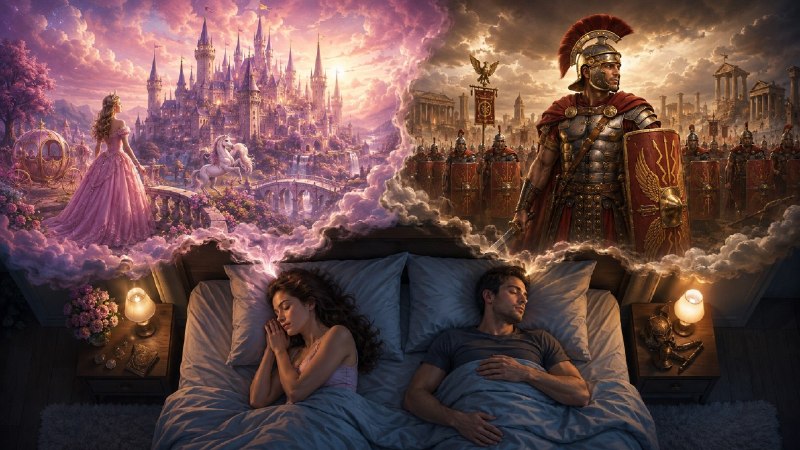
New evidence suggests that dream content can be predicted with high accuracy if daytime thinking, personality and sleep characteristics are taken into account. Italian researchers asked nearly 300 volunteers to write down their daytime thoughts and describe their dreams immediately after waking. Thousands of texts were then analyzed with neural networks.
People prone to spontaneous fantasies are more likely to have bizarre dreams with abrupt shifts in plot. Strong visual memory is associated with a greater number of concrete objects in dreams.
Daytime experiences also influence nighttime storylines. During the COVID-19 lockdowns, dreams featured isolation and restrictions more often, as well as conversations and social interactions — probably because the brain was compensating for a lack of communication. From 2020 to 2024, as public stress declined, dreams became less tense and less bizarre.
The results support the role of dreams in processing emotional experience. AI helped reveal patterns that are difficult to notice when analyzing individual narratives.