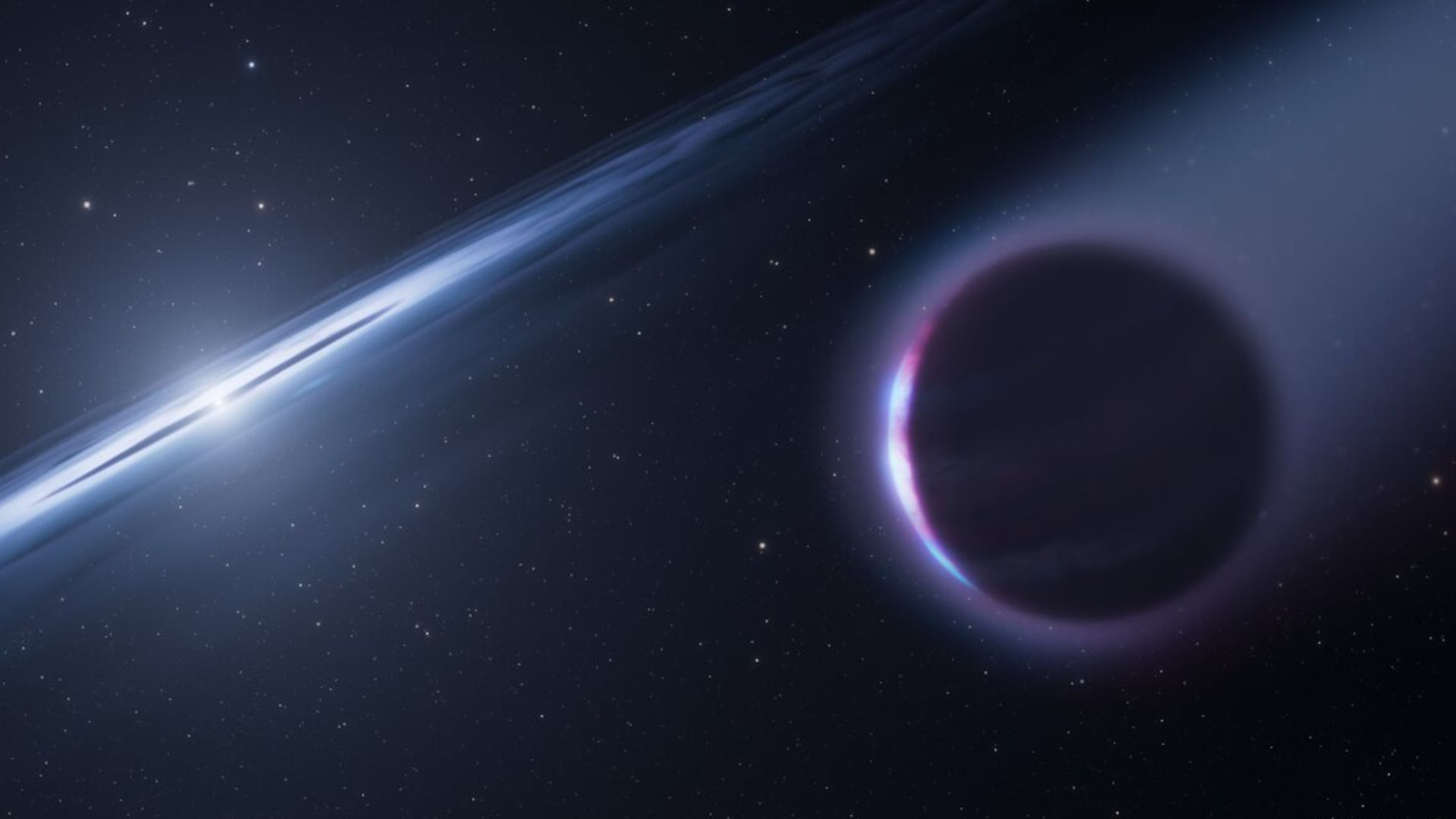
Astronomers have obtained the first convincing evidence of an atmosphere on a rocky exoplanet — a planet beyond the Solar System with a solid surface, similar in structure to Earth’s. The world in question is the super-Earth LHS 1140 b, located about 48 light-years from us. During the planet’s transit across its star, researchers detected leaking helium — an indirect but reliable sign that an atmosphere is present. The observations were made with the WINERED spectrograph on the Magellan Clay telescope in Chile.
This is the first such discovery for a potentially habitable rocky planet. It shows that such worlds can retain atmospheres for billions of years despite exposure to stellar radiation. That significantly increases the chances of finding planets with conditions suitable for liquid water and makes LHS 1140 b one of the most promising targets for the search for possible signs of life.