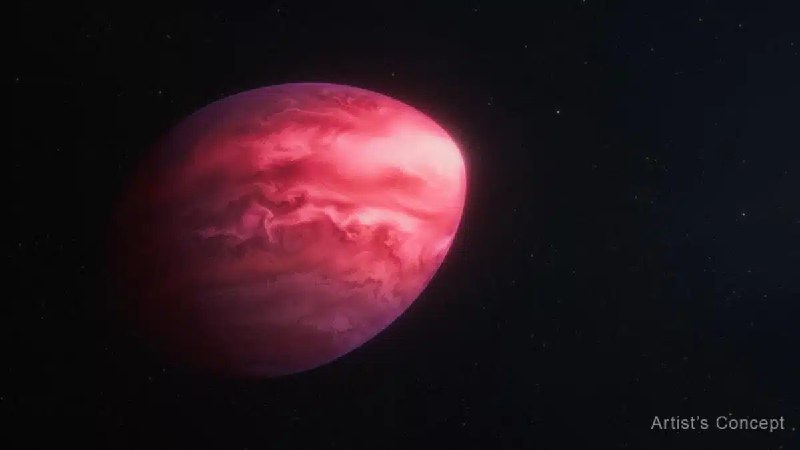
Astronomers have discovered the exoplanet GJ 3090 b, which orbits its star in a direction almost opposite to the star’s rotation. This cosmic oddity could help explain how planetary systems form.
Stars and planets usually form from the same disk of gas and dust and rotate in sync. But GJ 3090 b’s orbit is tilted by 136 degrees relative to the star’s direction of rotation, and it takes just 2.9 days to complete an orbit.
Scientists have found no convincing evidence that a massive celestial body changed the planet’s orbit. One hypothesis is that the planet formed from a new disk of gas and dust that arose at a different angle. This remains a possibility, but it points to the important role of a planet’s cosmic surroundings in its formation.