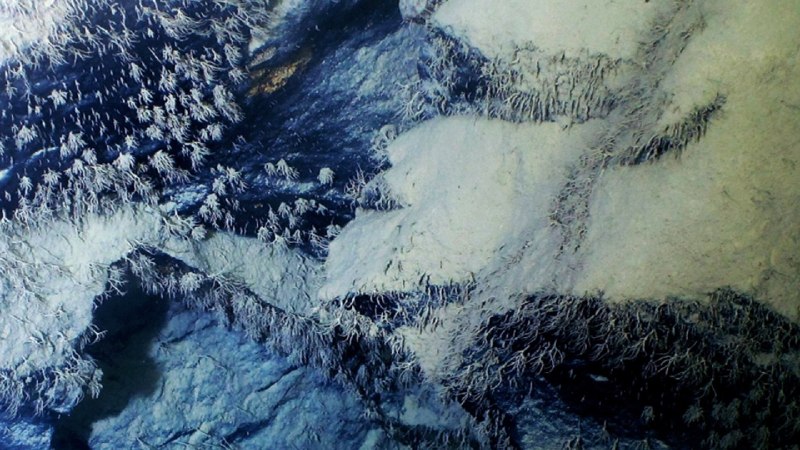
Chinese scientists have discovered a previously unknown ecosystem in the deepest ocean trenches on Earth. As part of the Global Hadal Exploration Program, using the manned deep-sea submersible Fendouzhe, researchers carried out 98 dives from 2020 to 2024 in seven areas of the Pacific Ocean, including the Mariana and Kermadec trenches.
For decades, it had been thought that the hadal zone — the deepest parts of the world’s oceans, located in ocean trenches — was almost uninhabitable. There is perpetual darkness there, temperatures are around freezing, and the pressure is hundreds of times higher than atmospheric pressure.
At depths from 9 to almost 11 kilometers, the team found 32 species from six groups of living organisms, most of them previously undescribed. Among the finds were a new family of foraminifera, Plumettidae, and a new family of bryozoans, Pierrellidae. The density of some colonies reached 4,300 individuals per square decimeter — roughly the area of a human palm.
It had previously been assumed that such deep-sea communities existed thanks to chemosynthesis, a process in which energy comes from chemical reactions rather than sunlight. However, partially digested pine pollen was found inside the organisms. This means that the deep-sea inhabitants feed on organic particles that sink from the ocean surface to the seafloor. In other words, life in the deepest trenches is sustained by the global cycle of organic matter.
The authors of the study believe that such ecosystems may be widespread in deep-sea trenches around the world. They also say these organisms could account for up to 11% of all eukaryotic biomass in the hadal zone, making them an important part of the global carbon cycle.