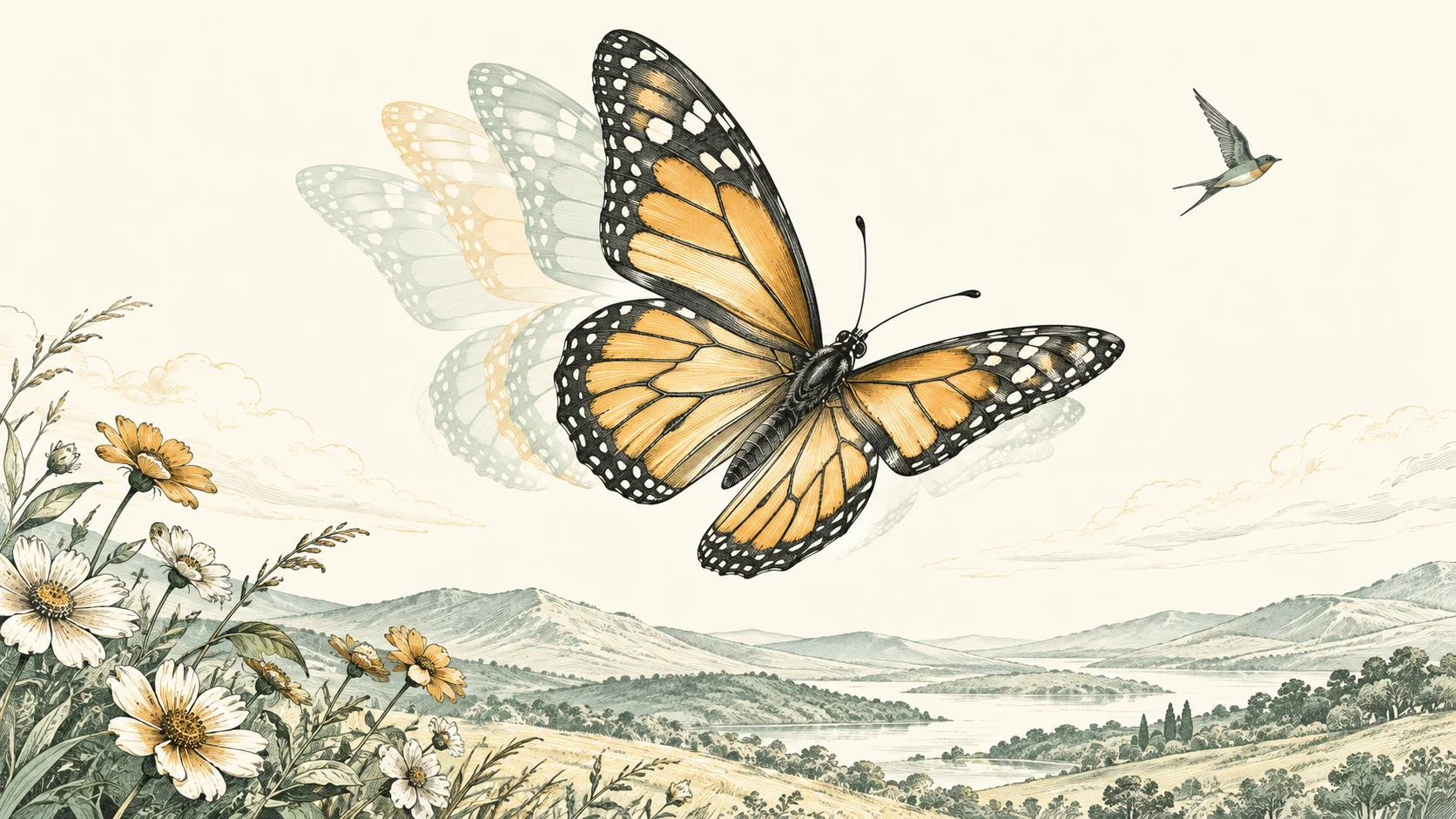
Bright wing patterns on butterflies may interfere with birds’ ability to accurately determine the direction a prey item is flying. Scientists at the University of Essex studied about 400 species of European butterflies, filming their flight at more than 1,000 frames per second. The footage was analyzed with a computer model that simulated bird vision. It turned out that during wingbeats, the butterflies’ coloration creates an optical illusion that makes it harder for a predator to calculate the attack trajectory.
The researchers then tested the hypothesis on more than 50,000 random patterns. The program selected those that most strongly made it harder for a predator to determine the trajectory. In the end, some of the best combinations were similar to real butterfly patterns. This suggests that the ability to distort motion perception may have influenced the evolution of butterfly coloration.