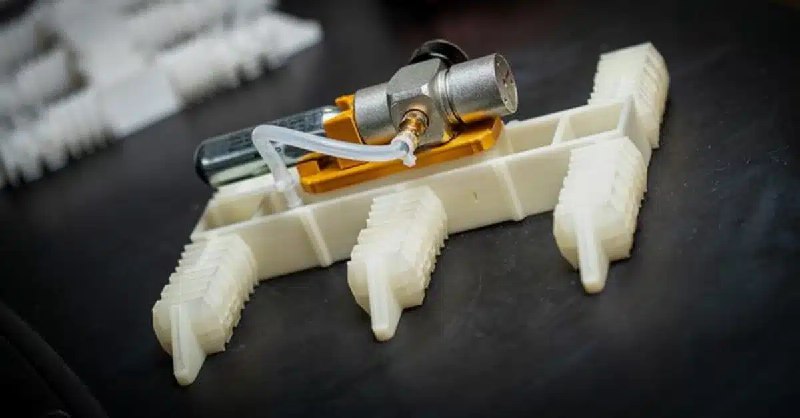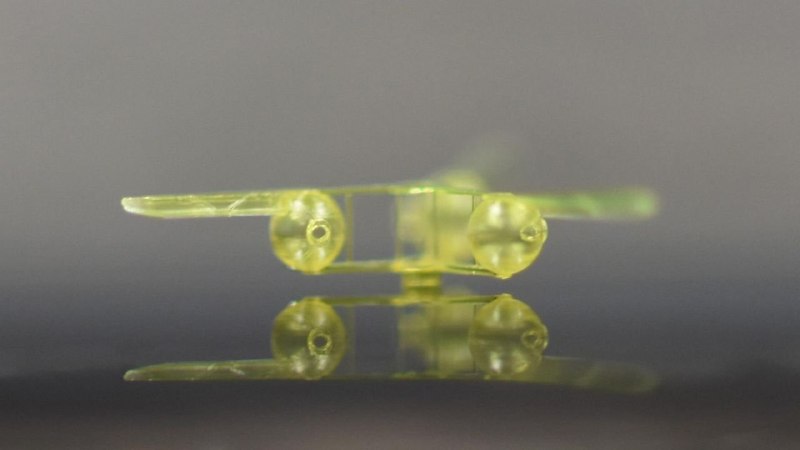
Recently, two research groups presented technologies for creating micro-robots without motors or batteries. The problem is a practical one: if a robot is the size of a grain of sand, where do you put the motor, battery, electronics, and control system? At the Swiss Federal Institute of Technology in Lausanne, researchers proposed using ultrasound, while at North Carolina State University, they turned to infrared light.
The sound-powered micro-robots work thanks to the Helmholtz effect, familiar from the sound of an empty bottle. Tiny cavities inside the body resonate under ultrasound and create an air jet, providing movement.
The American researchers created a soft robot that heats up under infrared light, curls, stores energy, and jumps. After landing, it returns to its original shape on its own.
Both approaches could be useful for environmental monitoring, pollution detection, and, in the future, medical micro-robots. The idea is the same: instead of trying to shrink a motor to the size of a grain of sand, make it unnecessary.