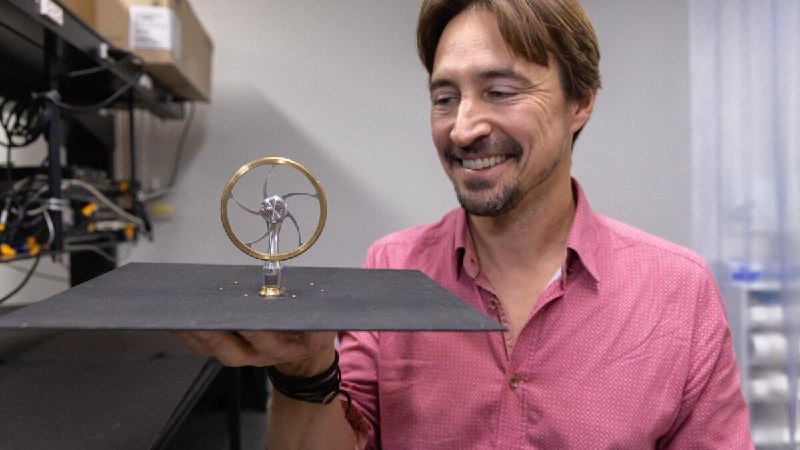
At the University of California, Davis, a new way of generating energy has been proposed: an improved Stirling engine can now operate at night thanks to the temperature difference between the ground and the cold night sky.
The engineers used a special radiative coating that allows the upper panel to release heat into space more quickly. This creates a temperature difference of more than 10°C, which starts the compact engine.
The Stirling engine has been known since the 19th century. It is a closed chamber filled with gas, where piston movement begins because of the temperature difference between two sides. Where it once required high temperatures, now night-time coolness is enough. The engine can generate up to 400 mW per square metre of coating. That is enough to power, for example, a small fan or automatic sensors.
The device does not require fuel and can operate in a fully autonomous mode — especially effectively in dry climates and cold nights. An engine that many considered outdated has unexpectedly become relevant in the search for sustainable and energy-independent solutions.