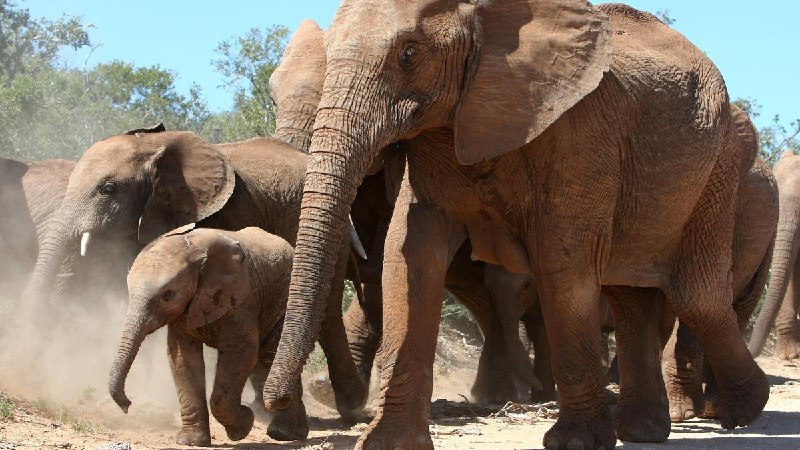
Elephants almost never develop cancer—just 5% compared with 25% in humans. An international team of researchers found that these animals have an unusually powerful cellular defense system.
The key is the p53 gene, which is responsible for spotting DNA damage. In humans, it exists in a single copy, while elephants have as many as 20 variants. Each of these variants encodes slightly different forms of the p53 protein, which efficiently recognize damaged DNA and trigger the self-destruction of potentially dangerous cells.
In addition, in elephants these p53 proteins can bypass the molecule MDM2, which in humans can block p53’s work and weaken this protective response.
The researchers believe that the diversity of p53 forms in elephants evolved in response to a specific feature of their anatomy: elephant testes are located inside the body. This increases the temperature of sperm cells, raising the risk of mutations. To preserve reproductive ability, the organism strengthened its genetic control systems—which, in turn, resulted in unusually strong protection against cancer.
The new finding may help guide new approaches to prevention and treatment of cancer in humans. Perhaps the key to overcoming cancer lies in the DNA of the largest land mammal.
Source: New Atlas