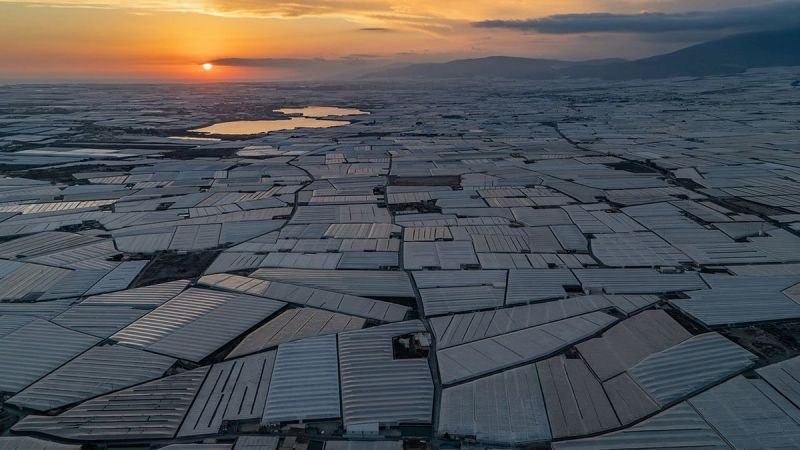
Almería in southern Spain has become one of the clearest examples of how difficult natural conditions can be turned into a sustainable food-production system. Agriculture has been practiced here since the 7th century AD, but the natural conditions were always harsh: mountain ranges block rain-bearing clouds, there are fewer than 50 rainy days a year, and the Levante wind can sometimes reach 100 km/h, making open fields vulnerable. The answer to these constraints was the greenhouse system now known as the “sea of plastic.”
At first, farmers used simple covers to protect plants from drying out and wind. In the 1960s, they noticed that crops grew faster and more steadily under plastic, after which large-scale greenhouse construction began in the region. That gave rise to a system that over time turned a difficult, arid landscape into one of the most productive agricultural areas in Europe.
What is especially interesting is that the greenhouse infrastructure also affected the local climate. Since the 1990s, Almería has recorded a temperature decline of about 0.3 °C per decade. This is linked to the large areas of light-colored plastic, which reflect part of the sunlight and reduce surface heating.
The main lesson of Almería is that resilience can emerge not from ideal conditions, but from a smart approach to existing constraints.