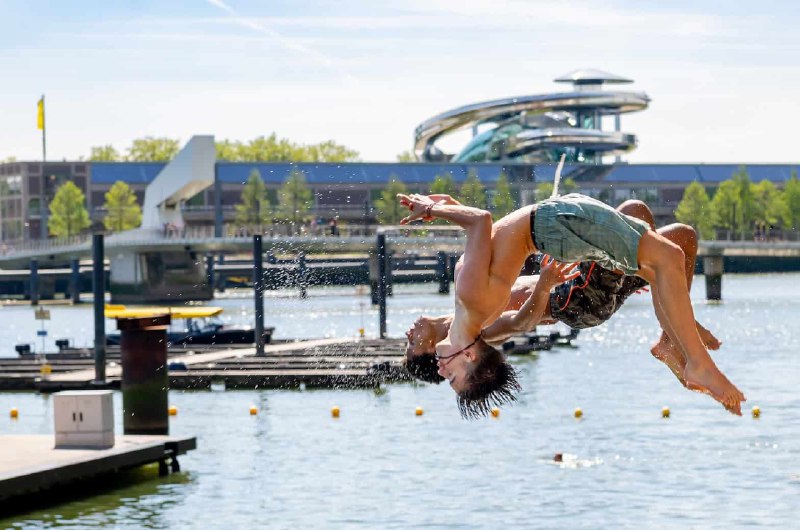
Once, swimming in a city river was commonplace. Then came the 20th century, with industry, pollution and bans. But today, more and more European cities are making their rivers suitable for recreation again.
In Paris, after years of reconstruction of the sewage system the Seine has become a clean river in the very heart of the capital. Swimming is officially allowed in three zones, with water-quality monitoring and lifeguards.
In Copenhagen, infrastructure was upgraded and the harbour was cleaned up, and people can now swim there even in winter. Oslo followed a similar path: after industrial facilities were closed, an entire waterfront area appeared with beaches, saunas and even diving platforms.
Amsterdam has improved the Amstel, while Rotterdam’s oldest port has restored its historic aquatic ecosystem and turned into an eco-zone with an urban beach. Basel and other Swiss cities, despite the catastrophe on the Rhine in 1986, have done the seemingly impossible: they cleaned up the water and built modern infrastructure for recreation.
Cities invested in infrastructure, shut down polluting industries, improved sewage systems and opened up the waterfront to people. The main thing in this story is resilience and persistence.