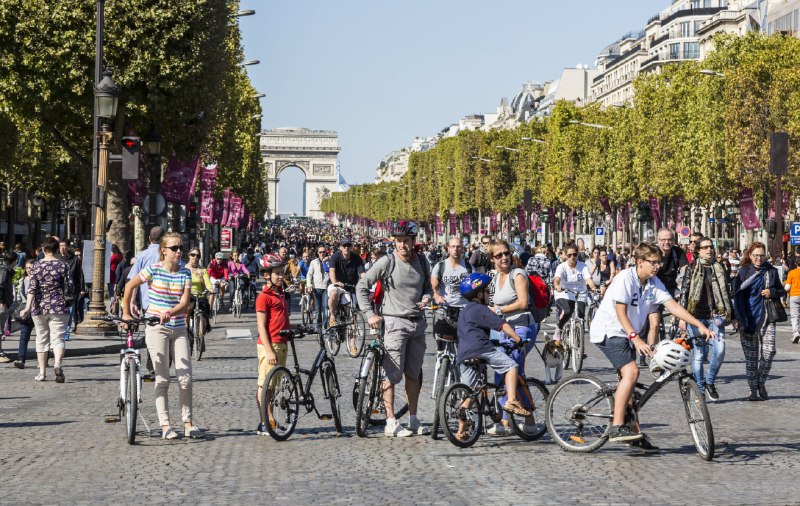
Paris took first place in a European ranking of cities by the quality of urban mobility for children, ahead of well-known examples such as Amsterdam and Copenhagen. The study was conducted by the organization Clean Cities Campaign and assessed the safety and accessibility of streets for children in 36 major European cities.
In recent years, Paris introduced speed limits of up to 30 km/h across 89% of its street network, expanded its network of safe cycling lanes, and implemented so-called “school streets” — sections closed to cars during the school day. These steps have made children’s everyday travel significantly safer and have enabled them to learn to navigate the city independently from an early age.
The top five also included Amsterdam, Antwerp, Brussels, and Lyon. The report’s authors emphasize that Paris’s success comes not from cultural heritage, but from political will and support from residents.
Similar measures are being introduced in some Russian cities as well. In Kazan and Yekaterinburg, “quiet zones” are appearing near kindergartens and schools; in Moscow, movement restrictions near schools are being piloted through the “My District” program. At the federal level, there is the initiative “Home–School–Home,” aimed at improving safety along children’s routes to educational institutions.
Source: Cities Today