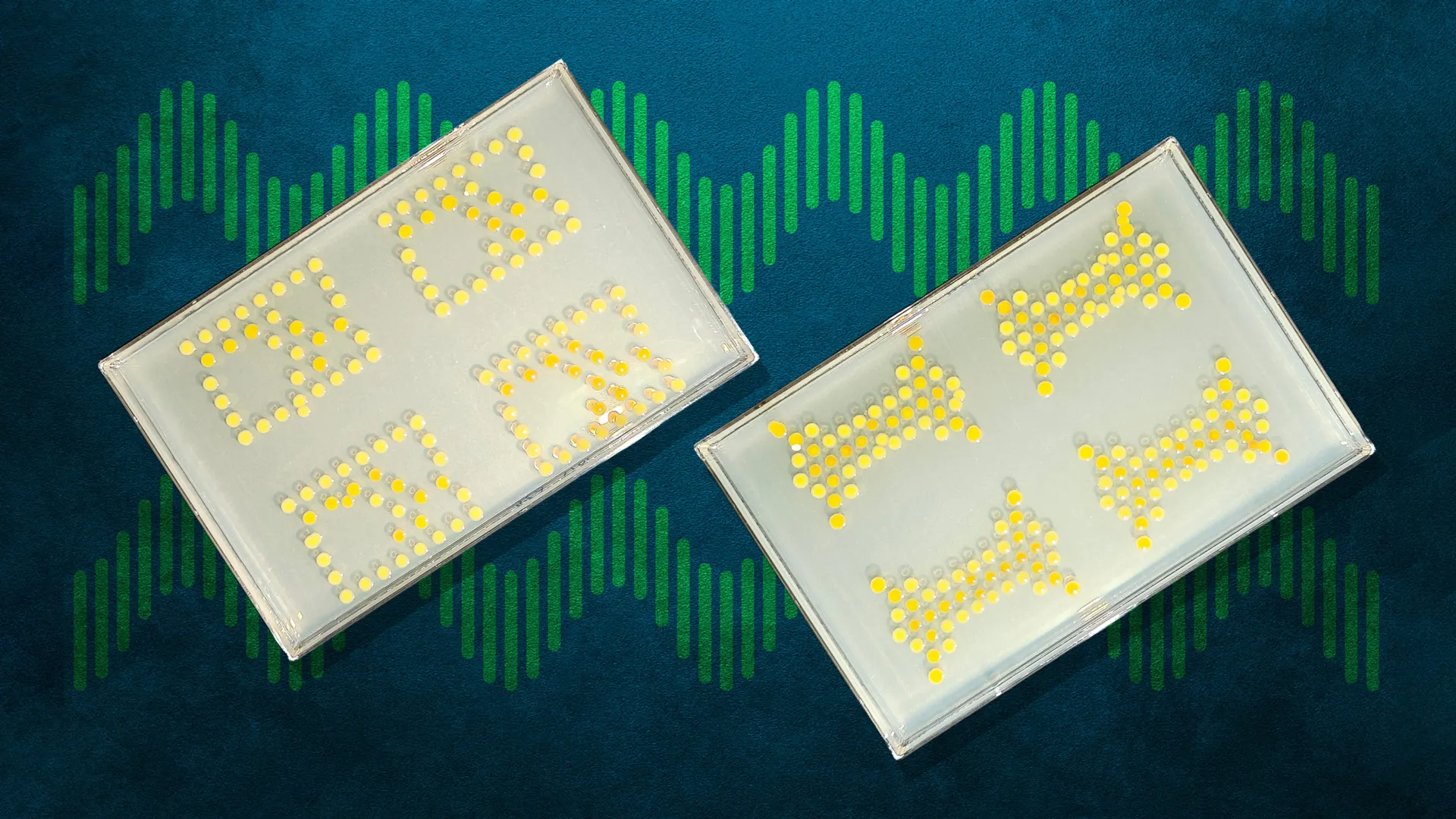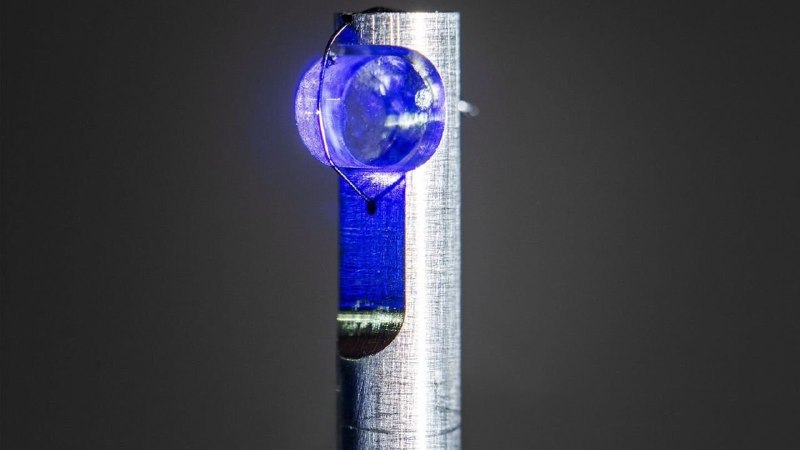
An international team of researchers has demonstrated the operation of a nuclear clock for the first time — a fundamentally new instrument that measures time not by transitions of electrons between energy levels, but by a transition within the atomic nucleus itself.
The researchers used the rare isotope thorium-229, whose nucleus can be excited with an ultraviolet laser. After many years of research, they managed to create a system that ran continuously for 24 hours.
Today, optical atomic clocks remain the benchmark for precision. They are so stable that they would be wrong by less than one second in one hundred million years. However, they have a fundamental limitation: electronic transitions are sensitive to external electric and magnetic fields. The nucleus, by contrast, is thousands of times less sensitive to external electric and magnetic fields. This opens the possibility of creating even more stable time standards.
In addition, the thorium nuclei are embedded in a crystal that operates at room temperature. In the future, this could simplify the creation of compact ultra-precise clocks for satellite navigation, telecommunications and data synchronization.