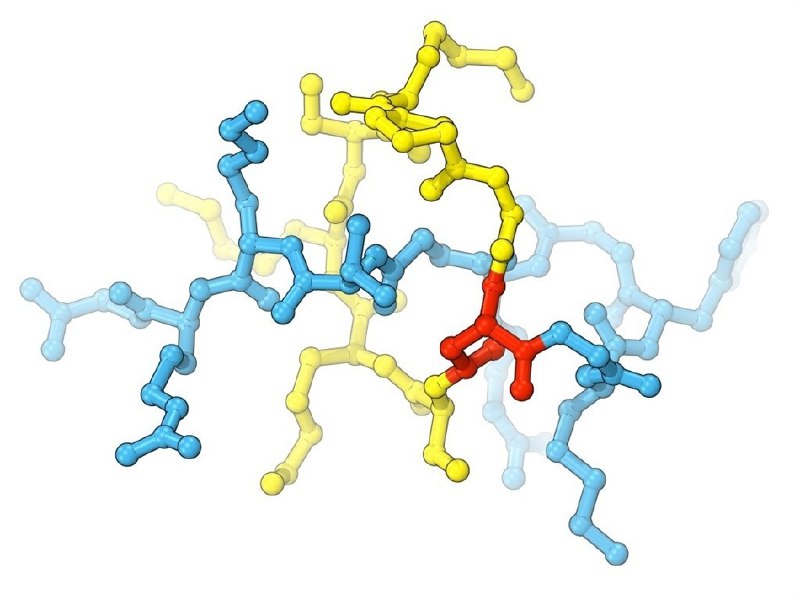
An international team of scientists from Canada and the United States has reported the discovery of an antibiotic—lariocidin—effective against bacteria resistant to treatment, including strains of Staphylococcus aureus and Mycobacterium tuberculosis. This compound belongs to the class of lasso peptides and uses a unique binding mechanism to ribosomes in a previously inaccessible site. As a result, it disrupts protein synthesis and leads to errors during protein assembly.
Lariocidin was obtained from soil bacteria Paenibacillus and is active against multiple pathogens without requiring specific transport proteins. In laboratory conditions, the researchers found that bacteria were not able to develop resistance to it quickly, which makes it especially promising.
The compound has already been successfully tested in mice. The researchers believe that lariocidin and its analogs could form the basis of a new class of antibiotics capable of addressing the crisis of antibiotic resistance.