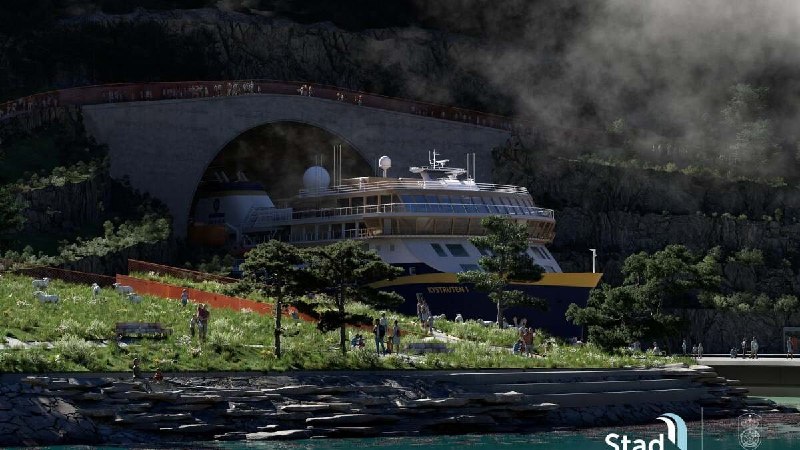
Norway has resumed preparations for the construction of Stad Ship Tunnel, the world’s first sea tunnel for regular traffic of large vessels. The Norwegian parliament has approved funding for the project, and construction is planned to begin in early 2027.
The tunnel will run through the Stadlandet peninsula, allowing ships to avoid the Stadthavet sea area, one of the most difficult to navigate on the country’s western coast. Here, storms rage for about 100 days a year, and waves can reach 30 meters as they come from several directions at once. Bad weather regularly delays fishing, cargo and passenger vessels, disrupting schedules and increasing costs.
The tunnel cut through the rock will be 1.7 kilometers long, 50 meters high and 36 meters wide. The 8.6 billion Norwegian kroner project will be carried out by the Norwegian Coastal Administration, Kystverket, on behalf of the Ministry of Trade, Industry and Fisheries. The first similar structure — the Malpas Tunnel in France — opened in the 17th century and was part of a canal system. However, all existing tunnels have been built exclusively for inland waterways and small vessels. Stad Ship Tunnel will be the first structure of this scale designed for regular sea traffic of large ships.
Norway remains one of the world’s largest exporters of seafood, and stable logistics directly affect product quality and competitiveness on the international market. Authorities expect the new route to bring part of freight transport back from roads and rail to sea, reduce fuel consumption and cut greenhouse gas emissions by about 60%. An additional effect could be the development of cruise tourism, as the new route will also be open to passenger vessels.