Astronomers have detected gamma radiation with energies up to 3.7 PeV from the Cygnus X-3 system. This is one of the highest energies ever recorded from a cosmic source.
For more than a century, scientists have been finding “cosmic bullets” on Earth — particles that arrive from space at nearly the speed of light. But the main question has long remained unanswered: where in the Universe are the “guns” that accelerate them?
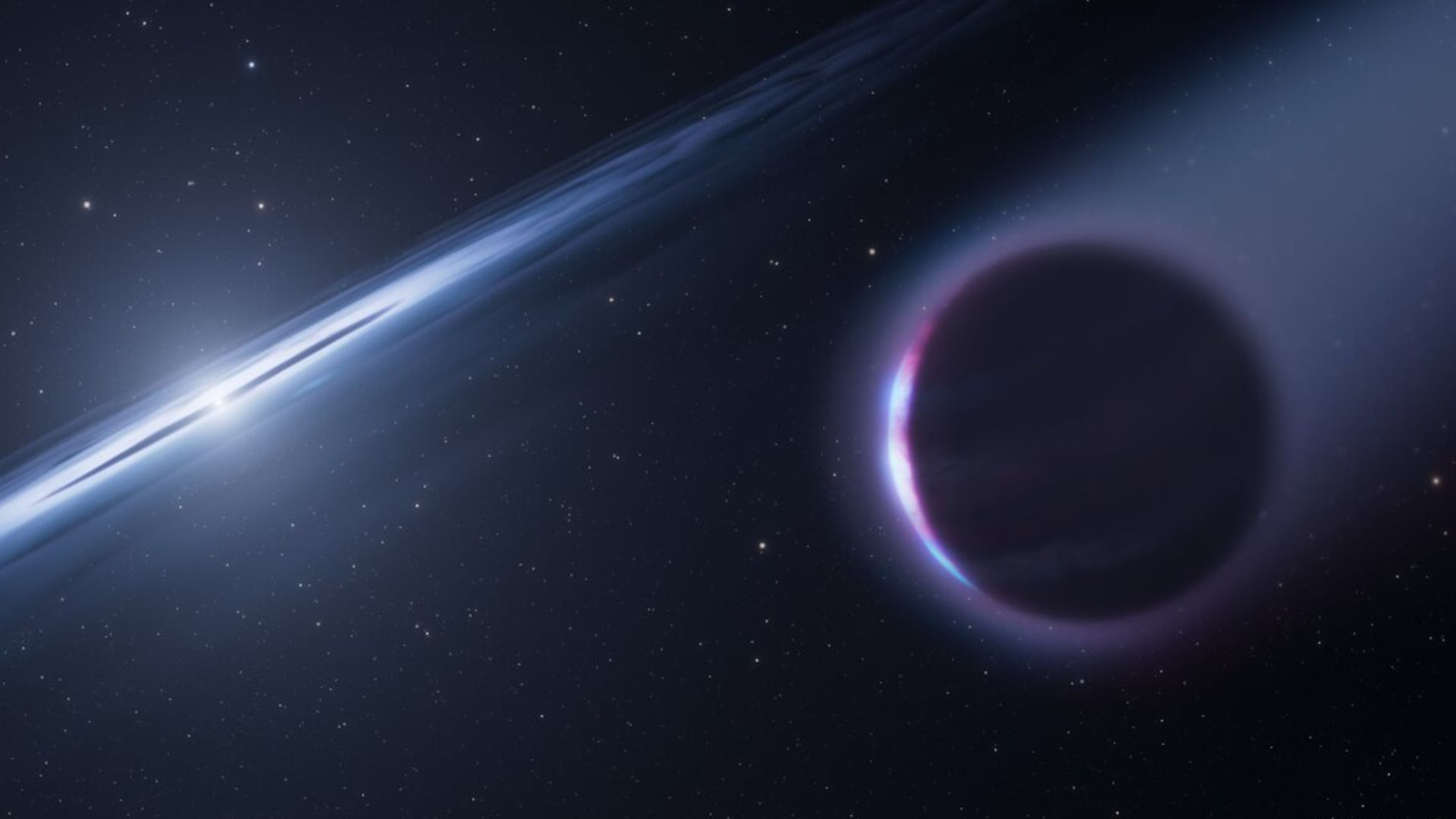
Cygnus X-3 is an unusual binary system in which a compact object interacts with a companion star and launches a powerful stream of matter moving at nearly the speed of light. New data show that protons in the innermost part of this jet may be accelerated to tens of PeV and produce ultra-high-energy gamma rays. There is also an important detail: the radiation changes over time and is probably linked to the system’s orbital motion. This indicates that the source lies inside Cygnus X-3 or very close to it.
The discovery gives scientists a rare opportunity to study a natural particle accelerator without a giant collider and kilometer-long tunnels. And most importantly, it brings them closer to solving one of astrophysics’ oldest mysteries: where do the most energetic particles reaching us from space come from?