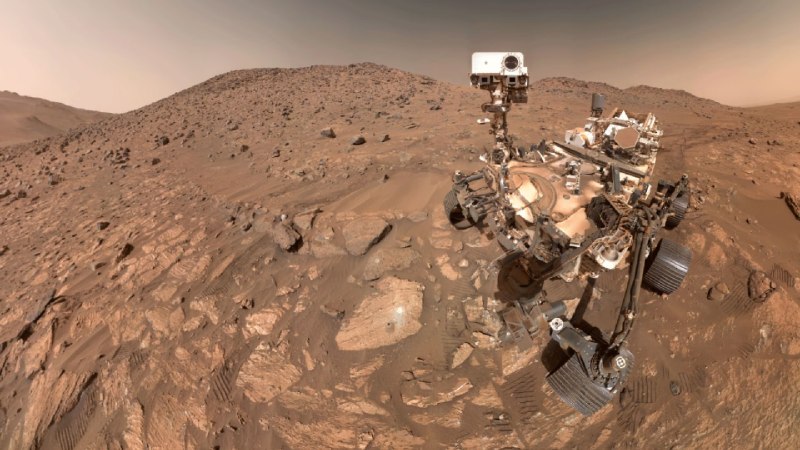
NASA’s Perseverance rover has detected complex organic carbon compounds in the ancient clay-rich rocks of Jezero Crater. These are the most convincing signs of complex organic matter found in this area of the Red Planet to date.
Scientists stress that the discovery is not evidence of life. Such compounds can form both with the involvement of living organisms and through natural geological processes. Still, macromolecular carbon on Earth is often found in very ancient rocks, so the finding is considered especially important in the search for possible biosignatures.
Over the past few years, Mars research has gradually come together into a clearer picture. Orbital spacecraft first confirmed the existence of ancient rivers and lakes. Then Curiosity discovered organic molecules and seasonal changes in some gases. Perseverance expanded that list by finding a variety of organic substances and potential biosignatures. Each of these discoveries alone does not prove the existence of life. But together they show that early Mars was a much more complex and likely more habitable world than was thought just a few decades ago.