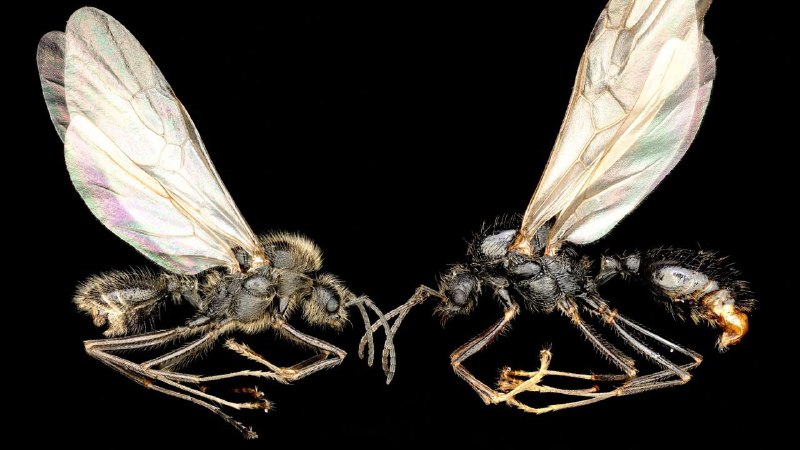
If you thought nature followed strict rules — female, male, mating, offspring — we have bad news for you. Or good news. Because one species of ants has gone and rewritten high school biology.
In southern Europe, Messor ibericus ants have demonstrated something unexpected: they have learned to "give birth" to clones of male ants of another species, Messor structor, without any mating. In 69 colonies, worker ants appeared even without M. structor males present. Genetic analysis confirmed that the queens laid eggs containing the DNA of "foreign" males, without passing on their own.
Scientists called this process "xenoparity" — the birth of the foreign. No such mechanism had previously been recorded in nature. And most importantly, this is not a glitch, not a mutation, not a laboratory experiment, but a perfectly ordinary part of these ants' lives.
Experts compare the discovery to science fiction. Meanwhile, the ants are simply doing what is needed to survive. It does not matter how it fits with what is written in the textbook.