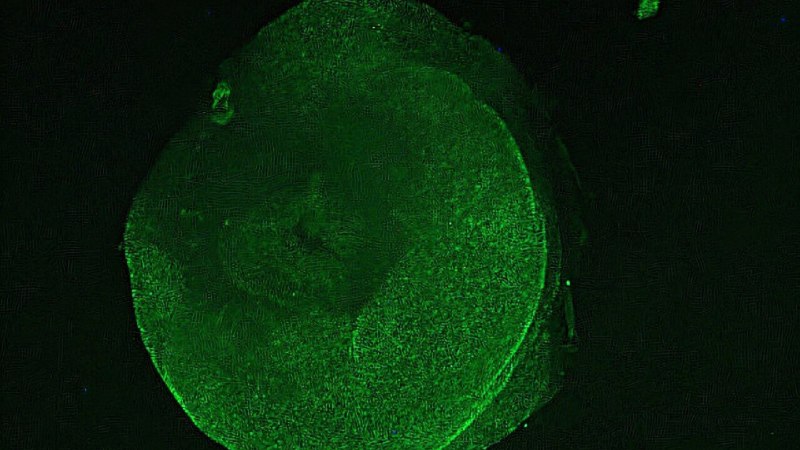
Scientists have reported an unusual observation: fragments of tissue from these invertebrates continued to show activity even after the organism itself stopped functioning as a single whole. The phenomenon has already earned a striking name — “zombie tissue.”
In this case, the observation concerns sea cucumbers, animals that have long fascinated biologists. These residents of cold seas are known for their impressive ability to regenerate. If most living creatures regard the loss of organs as a serious problem, sea cucumbers take the issue much more calmly and can restore damaged tissue with enviable efficiency.
The phenomenon is especially interesting because it helps us better understand one of biology’s most difficult questions: where exactly the boundary between life and death lies. We are used to thinking of death as an instant event. But at the cellular level, things are far less clear-cut. Tissue consists of many cells, and even after the whole organism stops working, individual cells can continue to retain activity for some time.
This is especially true in cold environments. Low temperatures slow biological processes. More and more data show that living systems are far more flexible and resilient. Inhabitants of cold depths regularly demonstrate abilities that would have seemed like science fiction not long ago.
There is also a touch of philosophy in this story. The more scientists study cellular life after an organism’s death, the more the familiar boundary between “living” and “nonliving” begins to blur. It seems that nature does not like black-and-white answers and prefers complex transitional states.