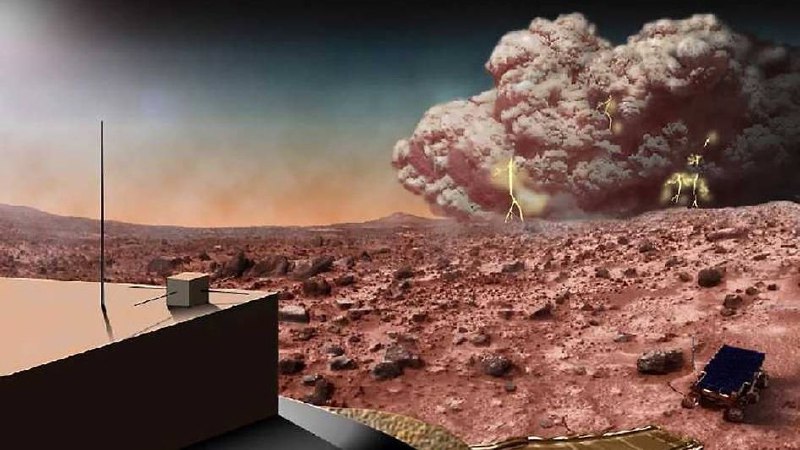
Weak electrical discharges have been recorded on Mars for the first time, occurring during dust storms and dust devils. The discovery was made using recordings from the microphone on the Perseverance rover. Over 29 hours of recordings, 55 short discharges were registered. They occurred at distances of up to two meters from the rover.
These “lightning bolts” differ from those on Earth: Mars has a very thin atmosphere, no liquid water, and no thunderstorms. Even so, electrostatic discharges trigger chemical reactions that produce aggressive oxidizers, which destroy organic matter. This helps explain why the search for traces of life on Mars is so difficult. In addition, the discharges could be dangerous for rovers and future astronauts. One theory is that such a discharge may have damaged the Soviet Mars 3 spacecraft in 1971.
More broadly, the finding gives scientists a key to understanding how Martian climate, atmospheric chemistry, and the possibility of life are closely connected. Dust storms with electrification occur regularly on Mars — thousands of times a year, sometimes covering half the planet. It is now becoming clear that they are not just weather events, but an active factor shaping the chemical environment.