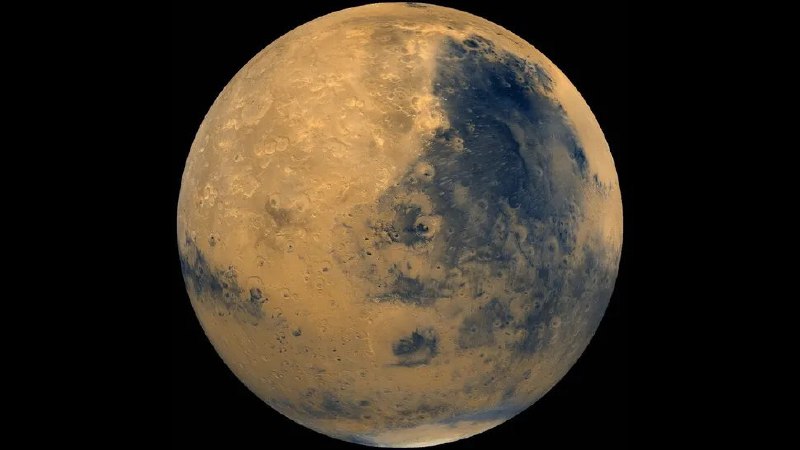
Why did Mars, once a world with liquid water and a dense atmosphere, turn into a cold desert? Two new studies suggest that the answer lies on two sides of the planet — its hot interior and its gradually disappearing atmosphere.
Scientists found that the mantle beneath the southern hemisphere may be 200–400°C hotter than the northern one and partially molten. This internal asymmetry could have affected Mars’s geological evolution.
The second study shows how Mars continues to lose its atmosphere. Solar wind creates waves at the boundary, which can eject clouds of oxygen ions into space. In some events, the losses are 10–100 times higher than usual. Over billions of years, such processes helped Mars lose a significant part of its atmosphere.
Together, the studies show that Mars’s modern desert is the result of a complex evolution involving processes in its interior and the gradual escape of its atmosphere into space.