An international team of scientists has proposed a way to start heating Mars in about 15 years by spraying special aerosols into its atmosphere.
The current average temperature on the Red Planet is about −63°C, roughly comparable to central Antarctica. In such conditions, carbon dioxide behaves not as a gas but as ice: it freezes and forms polar caps. If the planet is warmed a little, CO₂ will begin to evaporate, strengthening the greenhouse effect. After that, a domino effect follows: more heat, more gas, and in turn even more heat.
Previously, this problem was proposed to be solved by producing powerful greenhouse gases directly on Mars. That sounds impressive, but it would require decades and enormous resources. The new approach calls for dispersing graphene disks about 250 nanometers in diameter and aluminum cylinders about 8,000 nanometers long. These particles let sunlight pass through but trap the planet’s infrared radiation, slowing its cooling. Thanks to the properties of Mars’ atmosphere, they would remain aloft for a long time and spread quickly across the planet.
According to the calculations, the result should become noticeable fairly quickly by cosmic standards: within 15 years, temperatures in the warm season at mid-latitudes could exceed +7°C. That would be enough to begin melting subsurface ice. And then the same chain reaction starts again: water, vapor, additional greenhouse effects — and the climate begins to change more actively.
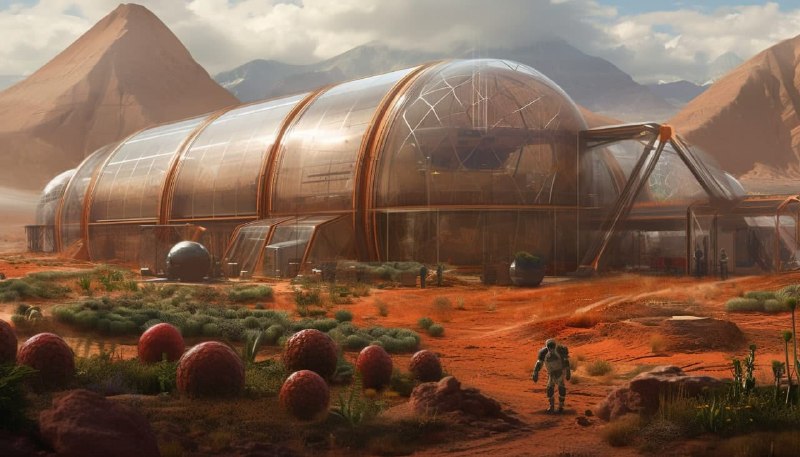
Why warm Mars at all? To make it more suitable for life and turn it from an extreme environment into a potential site for future colonies. It is both a scientific experiment and a strategic “plan B” for humanity. Although, wouldn’t it be better to try tuning Earth’s climate first?