Researchers at Peking University and Alibaba's DAMO Academy have used satellite images and deep-learning algorithms to create the first complete AI map of China's national renewable-energy infrastructure.
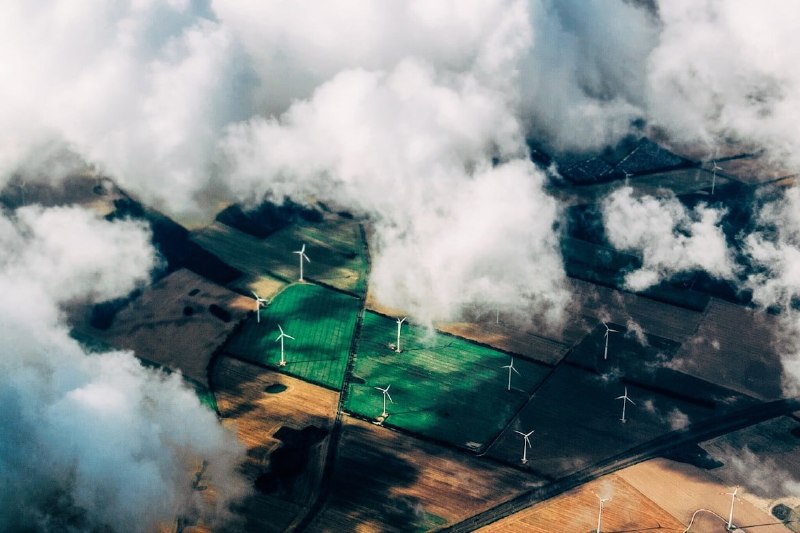
The resulting map covers nearly 320,000 solar sites and 91,000 wind turbines in 1,915 counties across China — from urban rooftops with solar panels to vast wind farms in Inner Mongolia. The researchers found that coordinating solar and wind generation at the national level significantly reduces power-supply instability and energy losses.
Artificial intelligence, which promises to make the economy more efficient, has itself begun consuming electricity at such a pace that power systems in many countries are struggling to adapt. According to the China Electricity Council, the energy use of the country's data-centre and computing sector rose 44% in the first quarter of 2026 and reached 22.9 billion kWh.
China's power grid is currently managed mainly at the provincial level, which creates losses — part of the green energy produced is simply not used. The new approach makes it possible to coordinate generation on a nationwide scale. New computing capacity is being built rapidly in the country's northern and western regions, where most solar and wind resources are concentrated.
The study's authors say such AI systems could become the basis for more sustainable power grids worldwide. In a broader context, it points to a new energy model in which AI is not only a consumer of electricity, but also a tool for distributing it more efficiently.