Texas A&M University has presented the concept of “metajets” — microscopic devices capable of moving and changing direction under the action of laser light. The motion is created through the interaction of light with metasurfaces, specially designed structures that can control light waves in unusual ways.
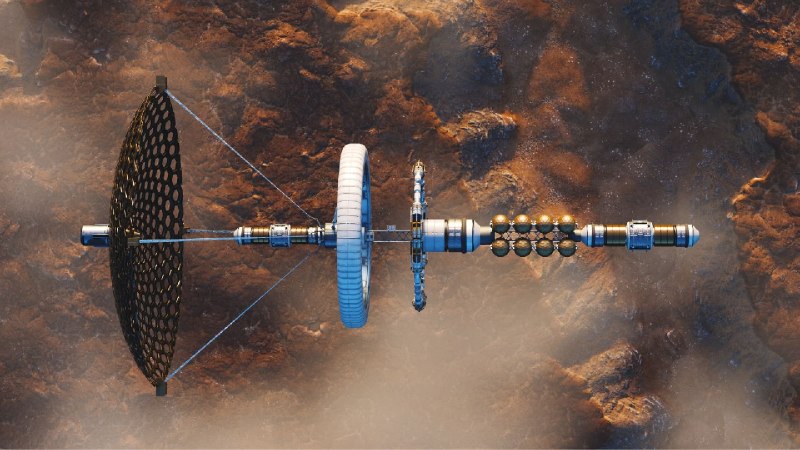
The idea of light-driven propulsion is not new: light sail projects have been discussed for many years. But metajets offer the next step — not just accelerating a craft, but enabling controlled movement in several directions. For interstellar missions, this is critically important: a space probe needs not only high speed, but also the ability to hold its course and adjust its trajectory.
In the future, the technology could allow ultra-light craft to reach Alpha Centauri in about 20 years. It is the star system closest to the Sun, located 4.3 light-years from Earth. For traditional chemical rockets, such a journey still seems practically impossible: it would require colossal fuel reserves, and the trip itself would take thousands of years.
For now, metajets exist only as a concept and a laboratory demonstration, and many technical questions remain before real interstellar missions — from laser power to the durability of the craft in deep space. But the direction of development is telling: interstellar flights are gradually moving from the realm of science fiction into the field of engineering calculations and experimental physics.