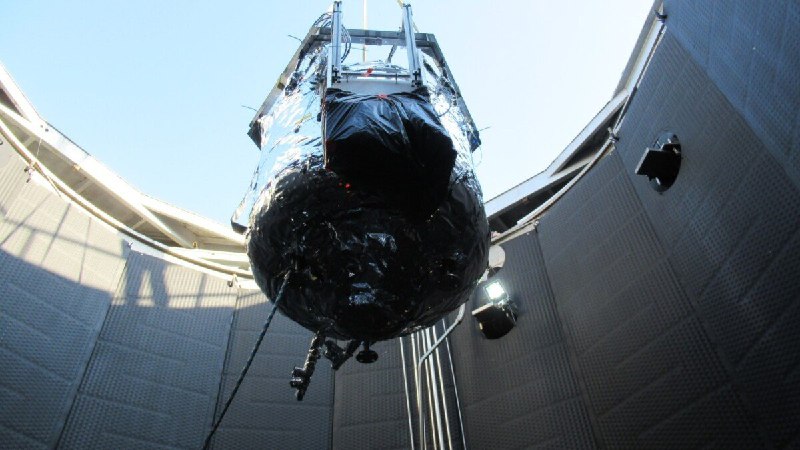
NASA has successfully tested a cryocooler capable of preserving cryogenic fuel with virtually no losses during long-duration spaceflight. This is a critically important development for crewed missions to Mars, where the one-way journey can take up to two years.
The system, called “tube on tank,” uses a two-loop cooling setup: the first loop, with liquid helium, cools the tank, and the second protects it from external heat. As a result, the fuel — for example, liquid hydrogen at -253 °C — remains in a stable state without the need to vent excess gas caused by evaporation. The tests lasted three months and confirmed the system’s reliability. It can be used both in flight and during operations on the surface of other planets.
For decades, scientists around the world have been trying to find a way to efficiently preserve cryogenic fuel during long space missions. Until now, the approach has relied on massive insulation and forced venting of vapors — temporary and inefficient measures. NASA’s new system is the first to offer a long-term solution that does not require increasing a spacecraft’s fuel volume or weight. The chances of reaching Mars and returning have now become significantly higher — not only in theory, but in engineering practice.