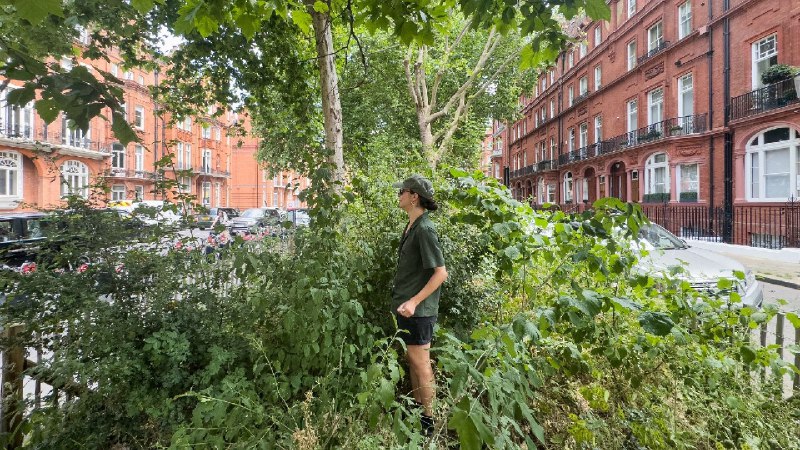
Across the world, the approach of creating “micro-forests” is gaining popularity. It was developed by Japanese researcher Akira Miyawaki back in the 1970s. These compact ecosystems—requiring only a few dozen square meters—become home to hundreds of species of animals and plants within 2 to 3 years.
The key feature of the method is the ultra-dense planting of local trees, shrubs, and grasses in 3 to 4 layers. This structure helps the ecosystem regulate itself without additional care. The forest begins to order its composition on its own quickly and restores ecosystems faster, improving air and soil quality.
Since 2022, more than 280 such forests have been created across Europe with the support of Earthwatch Europe and SUGi, with almost 140 established on school grounds with the participation of about 80,000 children.
Micro-forests, along with Europe’s green roofs, are two parts of a single picture of new urban thinking. Both trends are not simply about decorating cities: they help restore nature in places where it seems there is no room for it.