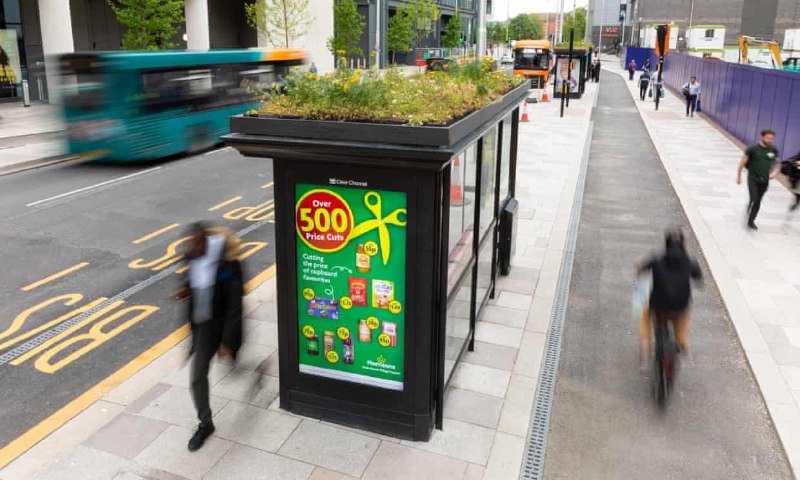
Green roofs on bus stops are becoming a new trend in cities around the world. The idea originated in the Netherlands and has already been implemented in Utrecht, where the stop roofs are covered with native plants. The result is impressive: bee numbers have stabilized, and the stops themselves have become an important part of the urban ecosystem.
In Boston, 30 such eco-stops appeared in 2025, and the city plans to scale up the project. If all 8,000 stops are greened, that would add 17 acres of greenery to the city — about the same as 13 football fields. This would help lower air temperatures by 10–12 degrees. The stop roofs are planted mainly with succulents that are resistant to urban conditions. They not only beautify the city, but also support biodiversity: bees, butterflies and birds find shelter here.
Green roofs on bus stops are already being implemented in the Netherlands, the UK, the Czech Republic, the United States, Canada, Australia and Singapore, and continue to spread around the world as part of sustainable urban infrastructure. Technically, the project is not simple: the roof must bear the weight, have drainage and root protection. But the result is worth it.