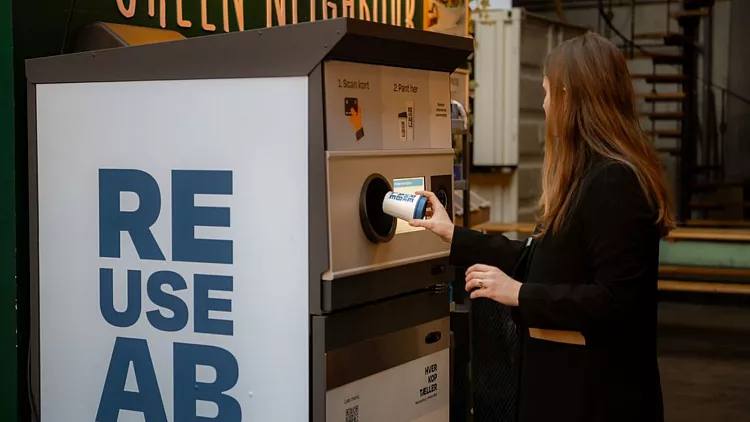
Denmark is continuing to pave the way toward an environmentally friendly future: the city of Aarhus successfully introduced a coffee cup return system over the course of a year. Residents returned 735,000 reusable cups, helping avoid the incineration of 14 tonnes of plastic and significantly reduce carbon dioxide emissions.
The programme was launched in response to troubling data: food and drink packaging accounted for almost half of the city’s waste. In January 2024, special deposit-return machines appeared in the city centre. The system is simple: when people buy coffee at participating cafés, they receive it in a reusable cup, which they can then return to a machine to get their deposit refunded to their card.
At first, the programme was not very effective, but everything changed after the Aarhus Uke festival in September, where only these cups were used. During the week-long event, 100,000 cups were returned, demonstrating that the system was viable in practice. The return rate has now reached 88%, and each cup is used an average of 44 times, significantly reducing the volume of waste.
Experts believe this experience could serve as a model for other cities. The problem of recycling disposable cups is acute worldwide: less than 2% of this waste is recycled. The European Union has already adopted the PPWR regulation, requiring countries to reduce packaging waste by 5% by 2030. Of course, successful expansion of the initiative will require government support and a well-designed policy to encourage environmentally friendly solutions. However, if other cities can introduce similar systems, the shift to sustainable consumption could accelerate significantly.