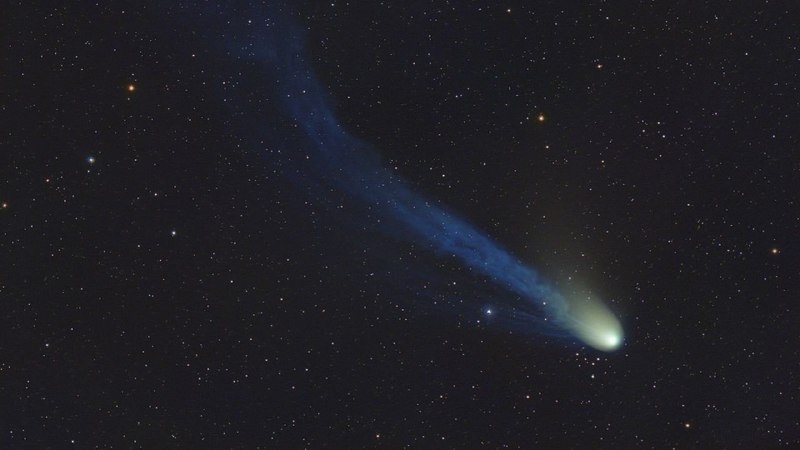
Scientists from NASA and international institutes have recorded a striking similarity between the water on comet 12P/Pons-Brooks (“the Devil Comet”) and water on Earth. Using the ALMA radio telescope and an infrared observatory in Hawaii, the researchers measured the hydrogen isotope ratio (deuterium/hydrogen), a unique “chemical fingerprint” that can be used to determine the origin of water.
This is the first time that a Halley-type comet — with an orbit longer than 70 years — has been found to have a deuterium/hydrogen ratio that is practically identical to Earth’s. Until now, it was believed that such comets could not have been the source of water on Earth, but the new data has changed that view.
Additional analysis showed that the water is released from the comet’s icy nucleus, rather than being formed in the gas cloud around it. This makes the finding especially reliable and important for understanding the origin of water on Earth and in the Solar System as a whole.
The discovery not only brings us closer to solving the mystery of Earth’s history, but also expands the search for life beyond our planet. If water was available even before planets formed, then conditions for life could have arisen in different parts of the cosmos — and much earlier than we thought.