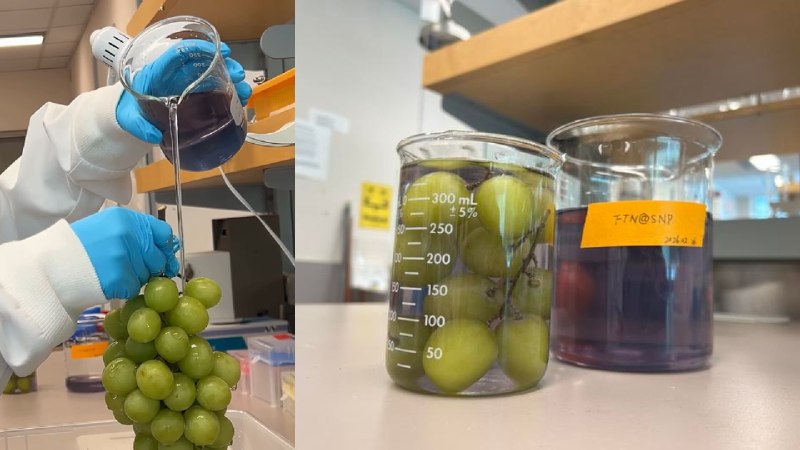
At the University of British Columbia, researchers developed a biodegradable solution for treating fruit that both removes pesticides and extends shelf life.
The solution is based on starch particles with added iron and tannic acid. These components form sticky structures that bind pesticide molecules. In laboratory tests, the treatment removed 86–94% of chemical residues from apples, while plain water removed less than half.
Beyond cleaning, the treatment can also act as a protective coating: if fruit is dipped in the solution and not rinsed off, it forms a “second skin” that reduces moisture loss and has an antimicrobial effect. Apples brown more slowly, and grapes stay firm for up to 15 days. The treated fruit also better preserves acidity and sugar levels.
The development is inexpensive — about three cents per apple — and could be used both industrially and at home, for example as a spray. Millions of tons of fresh food are lost worldwide every year, often because it spoils quickly. Solutions that both fight pesticides and prolong freshness are becoming especially in demand.