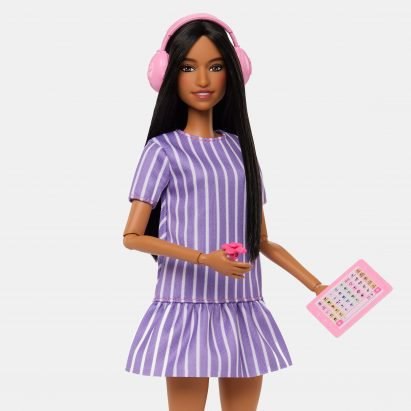
Mattel has introduced the first Barbie doll in the brand’s history with autism. The project was developed in collaboration with the Autistic Self Advocacy Network. The aim of the new release is to broaden the line’s inclusivity and give children a chance to see their own traits reflected in toys.
The doll comes with pink noise-cancelling headphones and a hand spinner, accessories that reflect the sensory needs of some people with autism. Articulated elbows and wrists make it possible to imitate repetitive movements (“stimming”), while a slightly averted gaze takes into account differences in eye contact. The set also includes a tablet with an alternative communication system (AAC) that helps express thoughts through symbols and images.
The clothing was designed with comfort in mind: a loose dress reduces contact between the fabric and the skin, and the shoes are stable and comfortable. In the UK, the launch was supported by activist Ellie Middleton, founder of the Unmasked community. She said girls with autism are often diagnosed late, and that a doll like this helps raise awareness of neurodiversity.
The new Barbie continues Mattel’s shift toward broader representation. The company has previously released dolls with different body types, skin tones and cultural traditions. Now the line is being expanded with a model that takes neurodiversity into account, reflecting current social changes and the demand for a wider definition of what is considered normal.