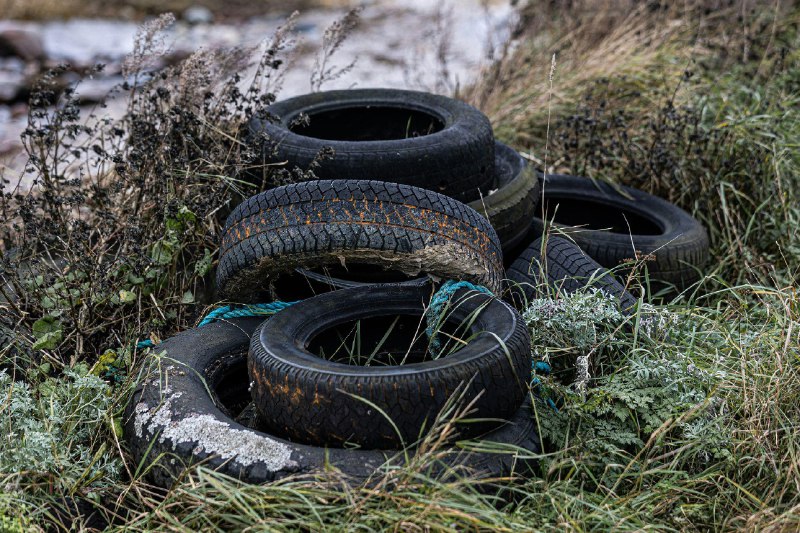
The University of Carolina presented a tire-recycling technology that allows converting up to 95% of a tire’s mass into useful materials. The method, published in the journal Nature, is based on a chemical C–H amination reaction and does not require high temperatures or aggressive reagents.
As a result, old vulcanized rubber is broken down and turned into soluble polymers with amino groups. These materials can then be used to produce epoxy resins—valuable components for mechanical engineering, construction, and electronics.
Unlike the widely used approach of pyrolysis, the new technology does not form toxic byproducts and yields important polymers in just six hours. This makes recycling rubber not only safer for the environment but also economically promising. In a context where more than 1 billion tires become waste every year and much of them are simply burned, this solution could be an important step toward sustainable waste recycling.