The Feinstein Institute for Medical Research has presented long-term results from the use of a “double neural bypass” technology in Keith Thomas, who was left fully paralyzed after a spinal injury. Nearly three years later, it is clear that the method did more than temporarily compensate for lost functions. It helped reshape the nervous system: even after stimulation was switched off, the patient retained some of the recovered movements and sensation.
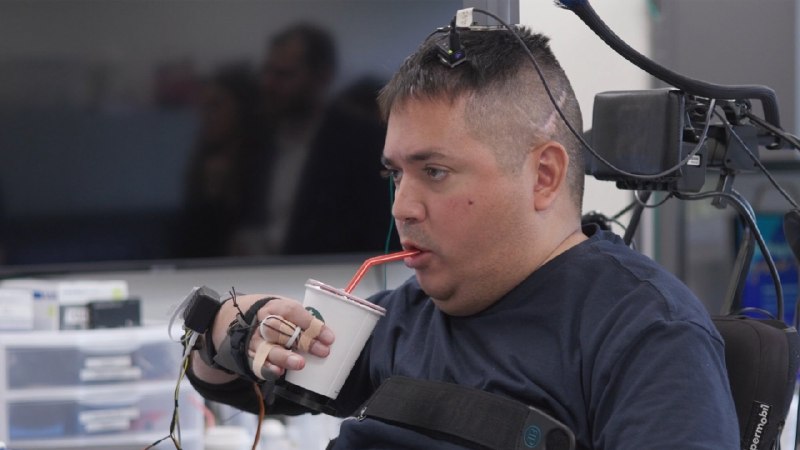
During the operation, five microelectrode arrays were implanted in the patient’s brain. Artificial intelligence algorithms recognize the intention to move and send commands to the muscles of the forearm through electrical stimulation. At the same time, the system returns sensory signals from the hand to the brain, restoring the sense of touch and allowing more precise control of grip strength. This two-way exchange of signals — from the brain to the hand and back again — is called a “double neural bypass.”
Unlike most earlier neural interfaces, which allowed users to control a robotic arm or a computer cursor, the new technology helped the patient use his own hand again. Today, Keith Thomas can pick up a cup on his own, drink water, perform household tasks, feel the touch of loved ones, and even carefully lift an empty eggshell.
The novelty of the development is that it not only creates a bypass around the damaged section of the spinal cord, but also contributes to long-term recovery of neural connections, opening up prospects for treating severe forms of paralysis.