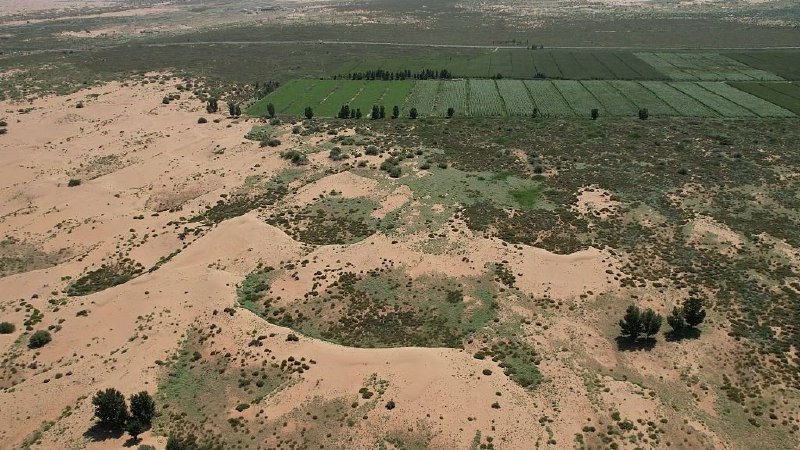
Northern China has spent nearly half a century as a large-scale environmental experiment. The Great Green Wall project, officially known as the Three-North Shelter Forest Program, began in 1978 to combat the spread of the Gobi and Taklamakan deserts. Over the course of the program, more than 66 billion trees have been planted, and another 34 billion are planned over the next 25 years. By 2050, the forest system is expected to stretch 4,500 km.
The project is aimed at reducing soil erosion and cutting the number of dust storms, which intensified in the second half of the 20th century because of expanding agriculture and urban growth. China’s forest coverage has risen from 10% in 1949 to more than 25% today. In several regions, sand dunes have been stabilized. For millions of residents in the northern provinces, this means cleaner air and lower risks for agriculture.
The project still faces challenges today, but the scale of the experiment is difficult to overstate. China’s experience has become a model for other countries. For example, the African initiative known as the African Great Green Wall draws in part on the work of Chinese engineers and ecologists.
China is effectively creating an open-air laboratory for sustainable development. It is learning from mistakes, changing approaches and experimenting with tree species. And perhaps that kind of evolutionary model will become the country’s main contribution to the global climate agenda.