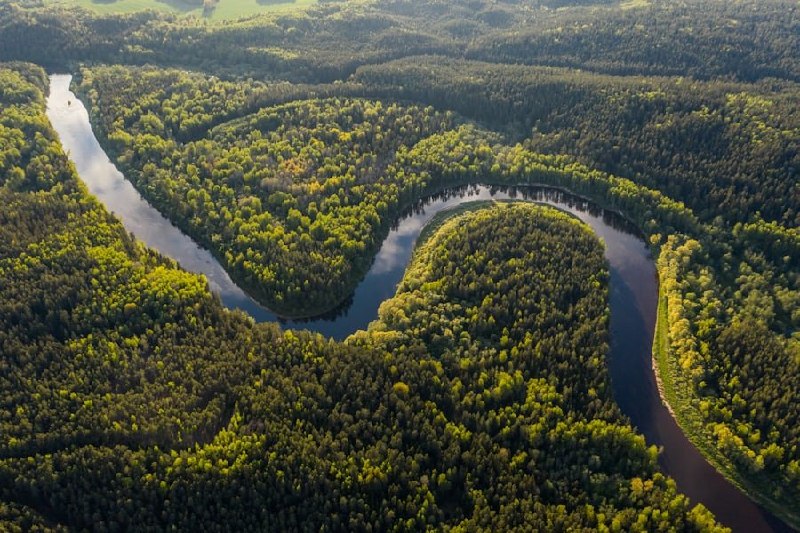
Under the forest canopy of the Brazilian Amazon, hundreds of previously unknown earthworks have been discovered, pointing to the existence of a large pre-Columbian society. The geometric complexes are linked to the Akiri culture, which existed from around 600 BC to 850 AD.
Scientists used LiDAR, a laser scanning method that makes it possible to see the ground surface through dense forest cover. With it, researchers identified 432 earthworks, most of which had not been known before. According to the authors, there may be tens of thousands of such structures in the region. Their scale and density suggest that a large society existed here, with a population of up to several million people.
The discovery changes our understanding of the scale of settlement in pre-Columbian Amazonia. If similar structures are found in other areas as well, scientists may need to reconsider not only the size of the ancient population, but also the role of people in shaping the modern Amazon rainforest.