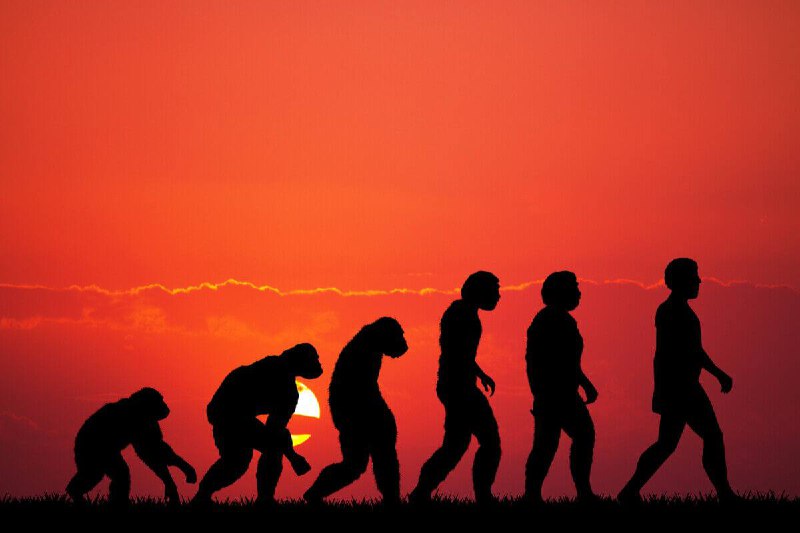
Scientists from the University of Cambridge have made a discovery that changes our understanding of human evolution. Using the COBRAA algorithm (Continuous Observation of Bayesian Recombination Across Ancestral lineages Analysis) to analyze genetic data, they found that modern humans did not descend from a single ancient population, as previously thought, but resulted from the merging of two independent lineages.
About 1.5 million years ago, at least two isolated groups of ancient humans lived on Earth. They evolved separately for more than a million years and merged around 300,000 years ago. The result of this merger is our modern DNA, in which about 80% of genes come from one group and 20% from the other.
Particularly interesting is that genes from the “minority” group were more often found in regions associated with the development of the nervous system and responses to fear. This hints at different living conditions for the two groups. In functionally important regions, evolution favored the genes of the dominant lineage.
This study overturns the classic view of the linear development of Homo sapiens and shows that human history is not a tidy family tree, but a tangled network of intersections and mergers. How many more mysteries does our DNA hold? Perhaps these ancient interweavings made us what we are.