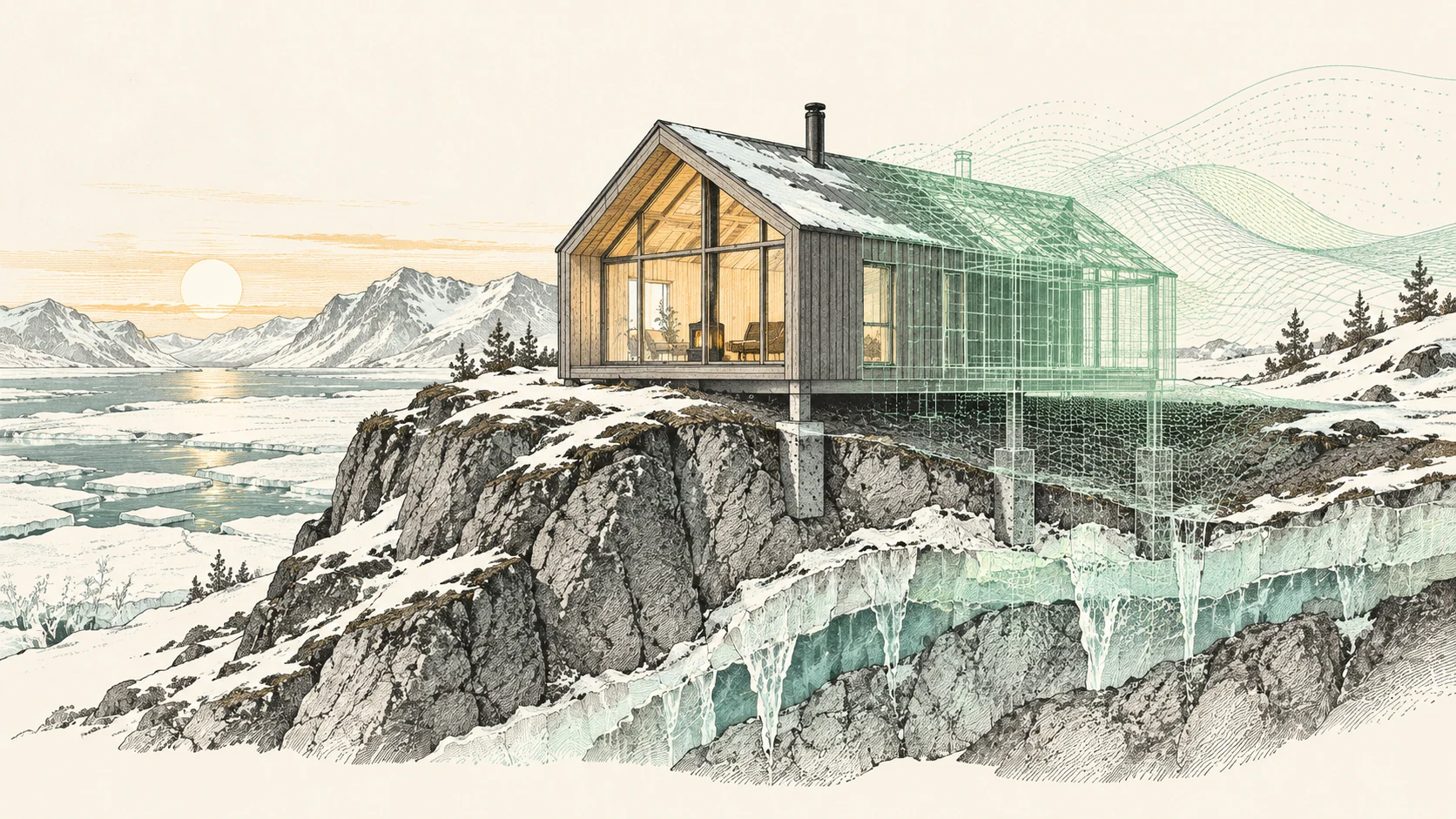
Specialists from MIPT and the Institute for Systems Analysis of the Russian Academy of Sciences (RAS) have developed a computational technology that makes it possible to model the behavior of buildings on permafrost while considering seismic risks. The method, based on a hybrid grid model, accounts for the complex dynamics of frozen ground and possible seismic impacts.
The technology helps identify weak points in a structure in advance by creating “digital twins” of buildings during the design stage. This is especially important for the Far North, where a design miscalculation can lead to accidents and field testing is extremely expensive.
Russian permafrost is not among the world’s most dangerous seismic zones, but local earthquakes do occur. And when they coincide with thawed permafrost and ground subsidence, the risk of damage to infrastructure increases. The technology opens a new era in designing for complex climate regions, where previously it was necessary to rely on approximate calculations and costly testing. Implementing such tools in Russia’s northern regions and the Arctic is especially important, since building safety directly affects people’s quality of life.