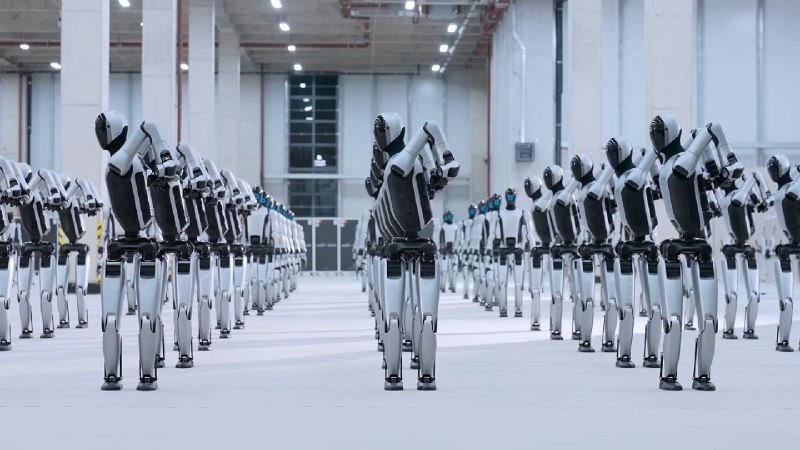
Authorities in Shenzhen have unveiled China’s first demonstration zone for humanoid service robots. The project envisions creating an urban district where machines can train and work in a real environment — not in laboratories, but in residential neighborhoods. This is the country’s first systematic effort to integrate robots into urban infrastructure.
The system will include a central experimental base, a coordination center and a network of specialized sites across Guangdong Province. Its main goal is to advance embodied intelligence, meaning robots’ ability to learn through physical interaction with the surrounding world. Sub-centers will handle local tasks and exchange results.
Guangdong already produces more than 40% of China’s industrial robots and 80% of its service robots. In 2025, the region’s AI industry exceeded 230 billion yuan, and 12.84 million service robots were produced.
The new zone in Shenzhen is meant to accelerate the practical use of robots in industry and services. For residents of major cities, this means new services such as delivery, assistance for older adults and maintenance of public spaces. It may also gradually change the familiar city landscape. Meeting a robot on the sidewalk could become as ordinary as riding an e-scooter.