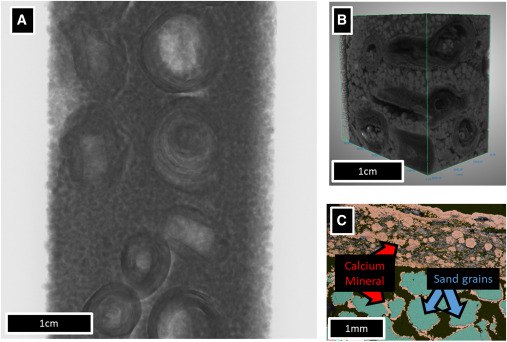
Engineers at the University of Montana have developed a building material based on the root-like network of a fungus, mycelium, and live bacteria of Neurospora crassa. According to a study published in Cell Reports Physical Science, the structure can self-heal for more than a month — significantly longer than similar materials. After that, activity is lost and the material becomes passive, but remains strong.
The mycelium creates a scaffold that makes it possible to form complex structures, while the bacteria increase strength through mineralization. The new material resembles bone tissue, which makes it possible to vary internal geometries and build complex objects from it. It also does not require firing at high temperatures to make, which reduces its carbon footprint.
In the future, the scientists plan to extend the period of activity by adding a nutrient capsule or to switch the material into a semi-living state in which activity persists as long as it is needed. The new material would be a strong addition to the concept of a "living house".